Magnesium Threonate vs Glycinate: Which Is Better?
, 13 min reading time
Magnesium threonate vs glycinate compared: elemental magnesium, absorption, evidence for sleep and cognition, safety limits, and which form suits your goal.
The most popular shortcut in the magnesium threonate vs glycinate debate is also the least useful: threonate for your brain, glycinate for sleep. Those labels describe how the forms are marketed, not a universal ranking of benefits. For Australian consumers, the more practical starting point is the amount of elemental magnesium a product supplies, followed by what human evidence exists for the specific goal.
Neither form has an official superiority rating under Australian nutrition standards. Dietary magnesium intake is often below estimated requirements in Australian survey data, but those figures measure intake, not diagnosed deficiency, and they don't show that one supplement form works better than the other. The useful comparison is more grounded: what's in the serving, what the research can support, whether you can tolerate it, and whether the dose and price make sense for you.
A more fashionable or expensive magnesium form isn't automatically the better buy. Magnesium L-threonate is often promoted for cognition, while glycinate is commonly associated with sleep and relaxation. But those shorthand claims can obscure the most important label detail: how much elemental magnesium you get.
Australian dietary data help explain why shoppers look at supplements in the first place. In the Australian Health Survey's usual-intake analysis, the proportion below the estimated average requirement included 33.5% of males and 37.2% of females aged 19–30. For ages 31–50, the figures were 36.4% of males and 32.8% of females. These are estimates of dietary intake, not clinical diagnoses, and the analysis didn't include magnesium from supplements. The Australian Bureau of Statistics' usual nutrient intake results provide useful context, but they don't establish that threonate or glycinate is the better choice.
The decision should be based on your actual goal. If you're trying to increase total magnesium intake, dose efficiency matters. If you're considering a cognition-focused product, the relevant question is whether the human research on that form supports the claim. For sleep, tolerability and the limited form-specific evidence matter more than marketing language. A practical bedtime routine can also include non-supplement habits, such as those discussed in this guide to sleep tea and evening routines.
Australian standards don't prescribe a separate intake for either form. They assess magnesium intake overall, so the best choice depends on elemental dose, tolerability, evidence and cost, not on which compound sounds more specialised.
The names describe what magnesium is paired with. Magnesium glycinate, also called bisglycinate, combines magnesium with glycine, an amino acid. Magnesium L-threonate combines it with threonic acid, a compound associated with vitamin C metabolism. Both are chelated forms, but that doesn't make their doses interchangeable.
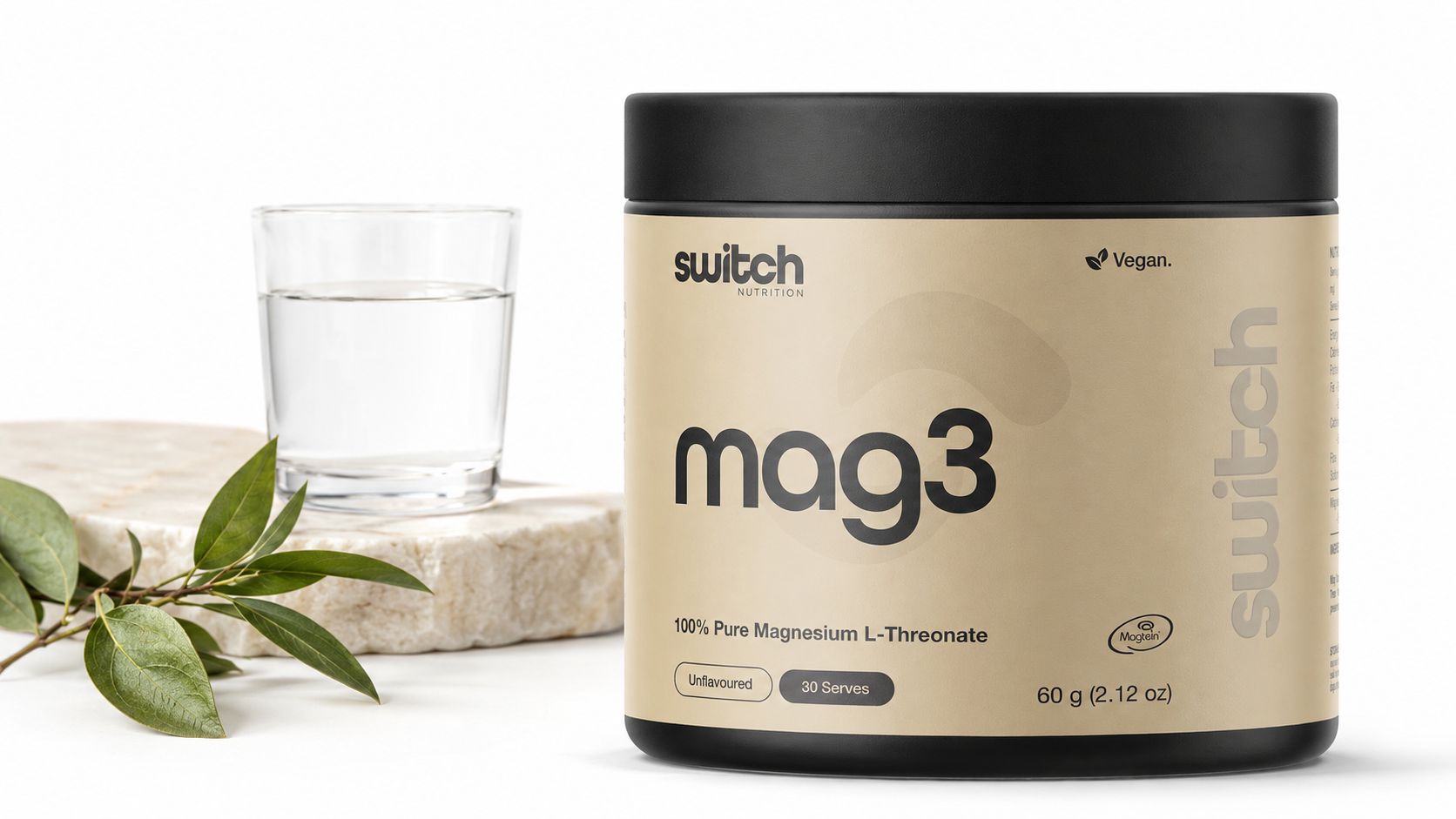
The label distinction that matters most is between compound weight and elemental magnesium. Compound weight includes the attached glycine or threonate. Elemental magnesium is the mineral itself, and it's the figure to compare when judging how much magnesium a serving contributes. A product can list a large amount of the compound while supplying a much smaller amount of elemental magnesium.
Threonate's carrier makes this especially important: much of the compound's total weight isn't magnesium. A reader comparing products by the biggest milligram figure on the front label could therefore mistake a large compound dose for a large mineral dose. Check the nutrition or supplement panel for the elemental amount per serving, and confirm whether the stated serving means one capsule, several capsules or a scoop.
Chelated forms are often chosen by people looking for a product they can tolerate, but a form name alone can't guarantee how an individual will respond. The label also needs to be read in context with other ingredients and other magnesium-containing products. For a broader look at magnesium as part of personal-care routines, self-care rituals with ArtNaturals offer a different format to consider, though topical use isn't a substitute for assessing a supplement's elemental dose.
For the evidence comparison, “research” should mean human trials on the specific form and outcome being discussed. A proposed mechanism or absorption theory may help explain why researchers are interested in a compound, but it doesn't by itself prove a benefit for sleep, memory or another health goal.
The clearest practical difference is elemental-magnesium delivery. Glycinate is generally more dose-efficient when the goal is to raise total magnesium intake. Threonate supplies a relatively small share of elemental magnesium because much of its compound weight comes from the carrier. The Australian clinical-research summary describes a study using 2,000 mg of magnesium L-threonate per day, which supplied about 144 mg of elemental magnesium. That's a meaningful example of why compound weight and mineral dose shouldn't be treated as the same number.
The absorption question is less settled than marketing often suggests. A form's proposed ability to reach a particular tissue doesn't establish that it delivers more elemental magnesium overall, nor does it prove a better clinical outcome. For threonate, cognition-focused research is the specific point of interest. For glycinate, the practical appeal is its role as a more efficient source of elemental magnesium. Neither point amounts to a head-to-head verdict.
Tolerability also varies by person and dose. Australian guidance identifies gastrointestinal effects as the basis for the supplemental upper limit, and excessive magnesium from non-food sources can cause diarrhoea and related symptoms. That risk is about the amount consumed and individual circumstances, not a guarantee that one form will be gentle for everyone.
There's no direct human trial establishing a winner between these forms for sleep. The available Australian clinical-research summary describes a small placebo-controlled sleep result for glycinate and mixed sleep findings for threonate. Readers comparing bedtime options can use this discussion of choosing magnesium glycinate for better rest as a starting point, while remembering that general sleep claims aren't proof of a specific product's effect.
| Criteria | Magnesium L-Threonate | Magnesium Glycinate |
|---|---|---|
| Elemental magnesium | A relatively small proportion of compound weight; check the labelled elemental amount. | Generally more dose-efficient when the aim is to increase total magnesium intake. |
| Research focus | Form-specific human research has examined cognition; this doesn't establish overall superiority. | Limited form-specific sleep evidence; often chosen as a practical magnesium source. |
| Sleep evidence | Findings are mixed, with no direct head-to-head trial against glycinate. | A small placebo-controlled sleep result is reported, but it doesn't prove a universal benefit. |
| Dose comparison | Compound milligrams can make the mineral contribution look larger than it is. | Compare elemental magnesium per serve, not the weight of the whole compound. |
| Best-supported use case | A cognition-oriented option for people interested in the form-specific research. | A dose-efficient option for topping up total magnesium intake. |
Neither form wins every criterion. Compare elemental dose, the evidence for your goal and how the product fits your overall intake rather than trying to reduce the decision to one score.
The honest answer to “which is better?” is better for what? A form that suits a cognition-focused interest may not be the most practical way to increase total magnesium intake. A product chosen for bedtime use still needs to be assessed by its dose and the evidence for that specific outcome.

If sleep is the priority, glycinate has a modest practical case: the available summary describes a small placebo-controlled sleep result, while threonate's sleep findings are mixed. That isn't enough to say glycinate treats insomnia or will help every person. There's no head-to-head sleep trial establishing that it outperforms threonate. If you're browsing products intended for bedtime routines, the sleep supplements collection can help you compare options, but product selection shouldn't replace medical advice for ongoing sleep problems.
If cognition is the priority, threonate is the form with the relevant human study described in the Australian research summary. A Perth-based study gave 100 adults aged 18–45 with sleep dissatisfaction either 2,000 mg per day of magnesium L-threonate or placebo for six weeks. The threonate group showed statistically greater improvement in total NIH Toolbox cognition score, with reported improvements in working and episodic memory and reaction time. The dose supplied only about 144 mg of elemental magnesium, so the study is evidence about a particular compound and trial, not proof that threonate is a more efficient way to raise magnesium intake.
Here's the video for readers who prefer a visual overview before weighing those goals against the label:
If you're topping up a low dietary intake, glycinate is generally the more dose-efficient choice. That doesn't mean everyone needs a supplement: the relevant question is whether your diet and health circumstances justify one. Nor does a study on cognition establish a reason to choose threonate for general magnesium replacement. Match the form to the purpose, then check the elemental amount and total intake.
Australian recommended dietary intakes are targets for total magnesium from food and other sources, not default supplement doses. For adults aged 19–30, the recommended intake is 400 mg per day for men and 310 mg for women. From age 31 onward, it is 420 mg for men and 320 mg for women. The Australian Nutrient Reference Values for magnesium set these values by age and sex, and they don't assign a separate target to threonate or glycinate.
The safety figure shoppers need to distinguish from those daily targets is the upper limit for non-food sources. For adults, the limit is 350 mg per day of magnesium from supplements and other non-food sources. It applies to elemental magnesium, whether it comes from glycinate, threonate or another form. It isn't the total weight of the compound on the front of the packet.
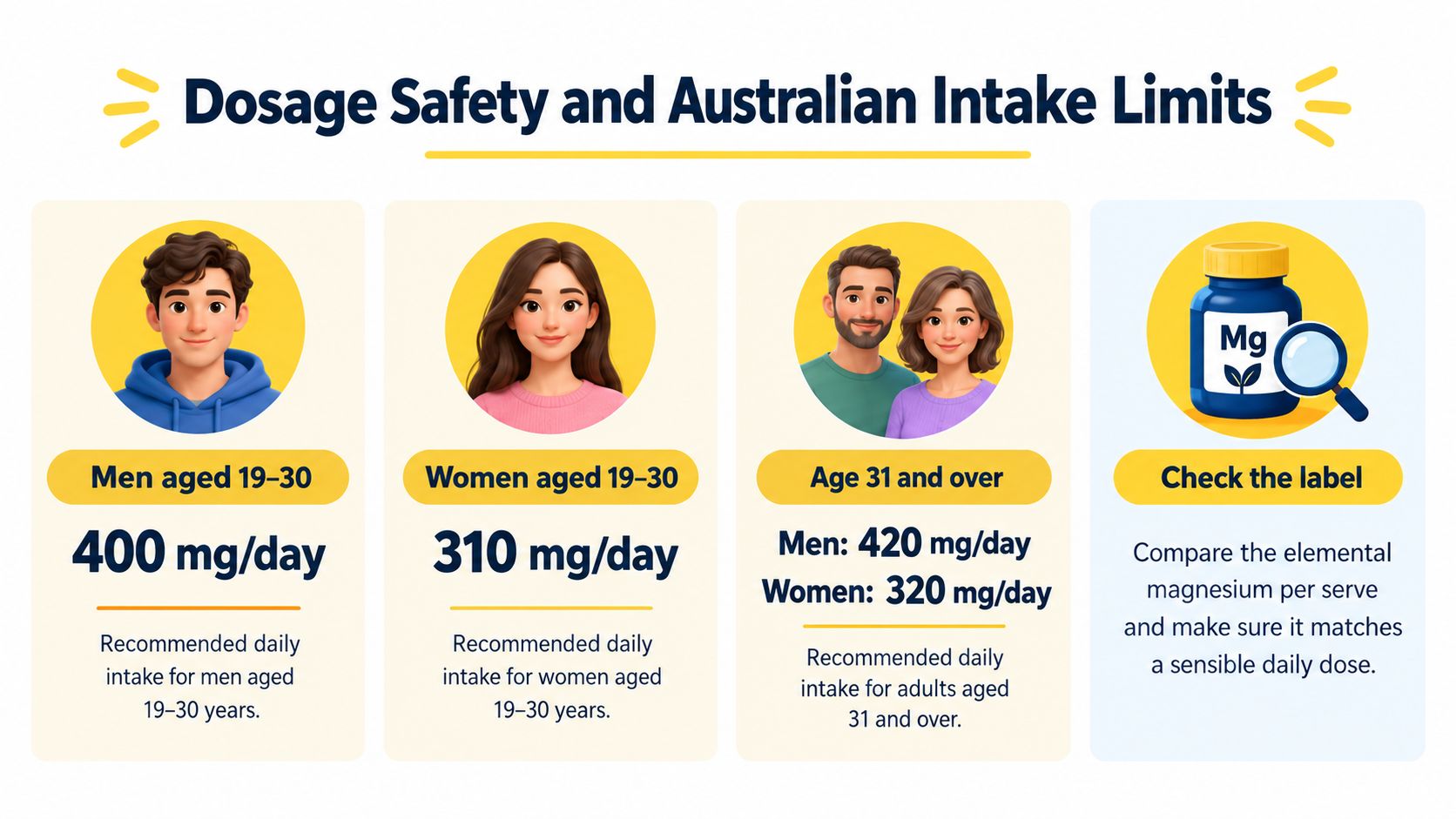
NHMRC guidance reports that 250 mg per day of supplemental elemental magnesium was generally tolerated, while diarrhoea became evident at 360 mg per day or more. Those figures help explain why the supplemental upper limit is separate from the food-inclusive recommended intake. Excessive supplemental magnesium can also cause nausea and abdominal cramping, and people with renal impairment need particular caution. See the NHMRC magnesium guidance for the basis of the intake and safety framework.
Magnesium can be spread across a multivitamin, electrolyte blend, antacid or laxative, so count the elemental magnesium from all relevant products. A label check should also include medicines: magnesium can affect absorption of some bisphosphonates and antibiotics, while some reflux medicines and diuretics can alter magnesium levels. Older adults may have reduced absorption, and medication context matters more than switching between threonate and glycinate.
If you're considering adding magnesium while using another supplement or sleep aid, read a guide to combining melatonin with magnesium at bedtime as general context, then ask a GP or pharmacist about your own medicines and health circumstances.
A product's form name and compound weight reveal little about the dose of magnesium it supplies. Start with the label's elemental magnesium per serve, then check the recommended serving size and how it fits with magnesium in other products. A higher price does not demonstrate better results.
Use the same checks for single-form supplements and blends:
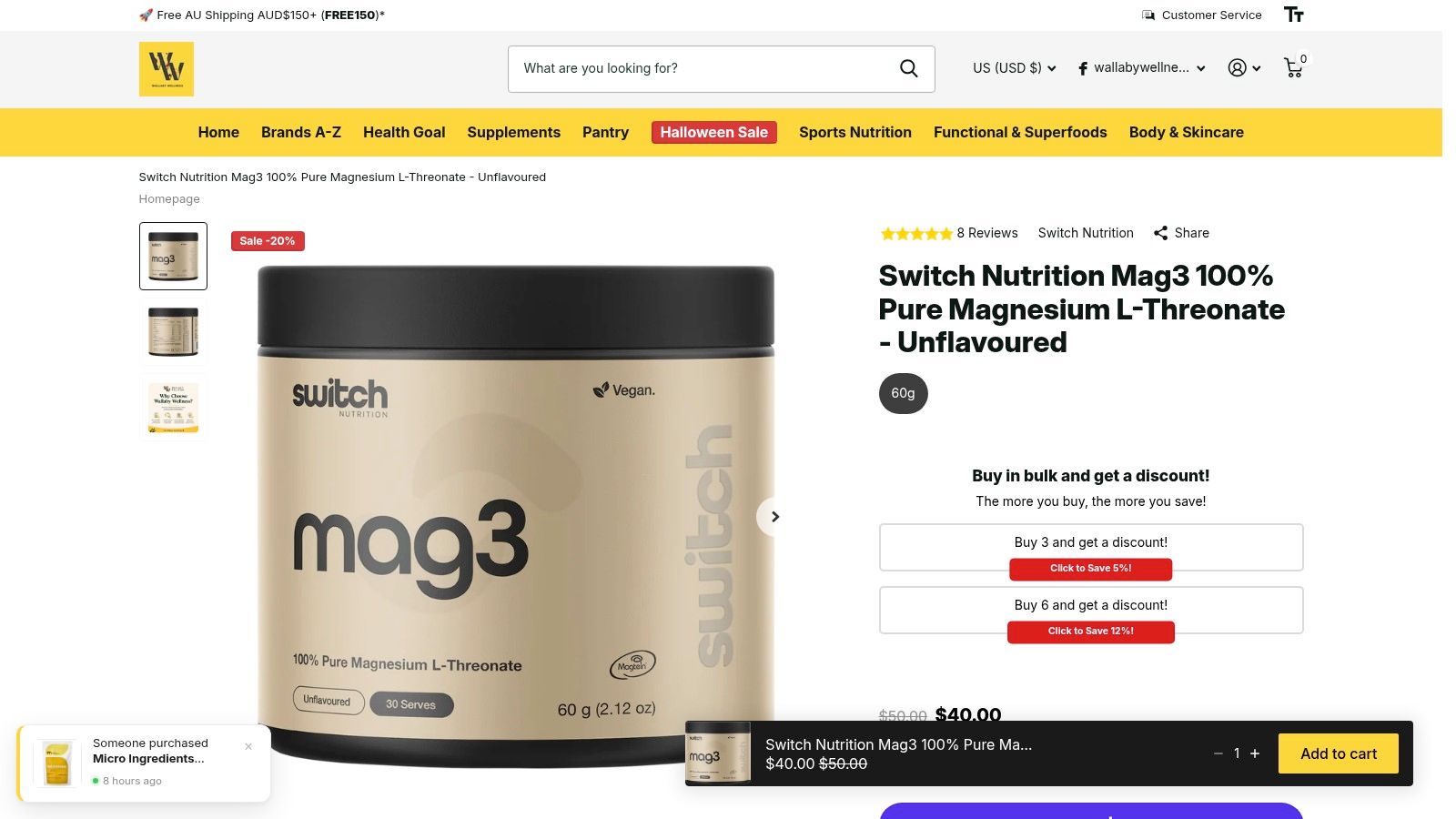
For example, Switch Nutrition Mag3 100% Pure Magnesium L-Threonate is an unflavoured powder positioned for cognition and sleep support. Its product information advises following the label's serving details. Check the elemental magnesium provided per serve before comparing it with other products.
Nutri Triple Magnesium + L-Theanine takes a different approach: it is a vegan capsule blend of bisglycinate, malate and taurinate, with 400 mg of elemental magnesium per four-capsule serve. That stated amount should be considered against Australia's supplemental limit, not treated as a default dose. Scoop and capsule counts alone cannot compare these products because their formulas and elemental-magnesium amounts differ.
The Wallaby Wellness magnesium supplements collection lets shoppers browse the category. Wallaby Wellness lists magnesium alongside other supplement types. Free shipping on orders over $150 AUD is available year-round with code FREE150.
For raising total magnesium intake, glycinate is the more practical starting point because it generally provides more elemental magnesium per dose than threonate. That makes it a more direct choice for this goal, not a universally superior form or the right option for everyone.
Consider magnesium L-threonate if your interest is its cognition-focused human research, while recognising that the evidence is limited and specific to this form. The research discussed above does not show that threonate supplies more magnesium or works better as a general-purpose supplement. A blend of chelated forms may suit someone seeking a combined formula, but the label still needs checking.
Start with your circumstances and the label. Count supplemental elemental magnesium across all products, rather than treating the food-inclusive recommended intake as a supplement target. If you take medicines, are pregnant, or have kidney concerns, ask a GP or pharmacist before starting or changing a magnesium supplement.
Compare elemental magnesium per serve across the products you shortlist, then choose according to your goal, tolerance and total daily intake.
Wallaby Wellness sells magnesium supplements alongside vitamins, minerals, sports nutrition and other wellness products for Australian shoppers. Check the elemental magnesium per serve and other label details before choosing.