Matcha vs Coffee: Caffeine, Flavour and Fit
, 16 min reading time
Matcha vs coffee: caffeine by serving, flavour, and who should switch in Australia.
The most popular advice says to swap coffee for matcha if you want a gentler, healthier lift. Don't take that swap at face value. Matcha vs coffee isn't decided by the name on the menu, because a heavy matcha serve can approach or pass a standard coffee while a light one stays well below it.
What matters is the milligrams in the prepared cup, plus how that cup is sweetened, when you drink it, and what else you've already had that day. Once you count the finished drink instead of the reputation, the choice gets simpler, and a lot more honest.
A smaller caffeine dose only arrives if you put less in the cup. With matcha, that means weighing less powder. A bigger scoop raises the milligrams even when the drink still looks like a calm green tea.
Matcha is easy to treat as automatically lighter while it is popular. Australian users recorded 33.8% more matcha logs and 8% more coffee logs in 2025 than in 2024, according to MyFitnessPal data reported by Melbourne Insider. The logs count drinks people chose to record. A clinical comparison of matcha and coffee sits outside what that dataset measures.
National datasets usually fold matcha into tea. There is no trustworthy Australian matcha average on its own. The workable figures are gram-based ranges for matcha and serve-based figures for coffee.
Compare the drinks on four practical things. First, caffeine in the finished cup. Second, how each drink is made. Third, how it tastes once sugar and milk are included. Fourth, what nutrition evidence supports, rather than what café marketing borrows from green tea generally.
Two guardrails run through every comparison that follows. Treat the daily total like a spending limit: every source draws from the same pool.
Tea, soft drink and a second coffee all count toward that same budget, not only the drink in your hand.
A heavy matcha serve can approach or exceed a standard coffee; a light one may contain far less. The useful comparison is the caffeine in the prepared cup, with matcha measured by powder weight.
| Drink and serve | Typical caffeine | What moves the number |
|---|---|---|
| Instant coffee, 250 ml | Median 60 mg | Brand and spoon size |
| Brewed coffee, 250 ml | Median 80 mg; 130–282 mg reported at one outlet on different days | Brew strength and day-to-day variation |
| Espresso, one shot | About 100 mg | Number of shots |
| Black coffee, 240 ml | About 79 mg, or about 33 mg per 100 ml | Cup volume |
| Brewed green tea, 250 ml | About 30–50 mg | Steep time; context only, not matcha |
| Ordinary tea, one cup | About 50 mg | Leaf and steep |
| Matcha, 1 g powder | About 19–44 mg | Grade and label; weigh the powder |
| Matcha, 2 g powder | About 38–88 mg | Powder weight; milk does not remove caffeine |
| Matcha, 4 g powder | About 76–176 mg | Powder weight; may match or exceed a standard coffee |
| Pregnancy or breastfeeding, whole day | 200 mg limit | All sources combined |
| Healthy adult, whole day | About 400 mg upper guidance | All sources combined |
Coffee figures for 250 ml instant and brewed coffee are from the Australian Institute of Sport caffeine guide. The remaining drink figures and matcha ranges are typical estimates; actual amounts vary with preparation and product.
The Australian Institute of Sport reports a median of 60 mg for a 250 ml cup of instant coffee and 80 mg for brewed coffee. At one outlet, brewed coffee ranged from 130 to 282 mg on different days. A café figure is therefore an estimate, not a fixed dose.
The chart uses 60 mg as the instant coffee reference. For more detail on how brewing affects caffeine content, see caffeine insights from Cartograph Coffee.
Count espresso by shots: at about 100 mg per shot, a two-shot drink is about 200 mg. Larger black coffees can also add caffeine because they contain more coffee.
Brewed green tea and ordinary tea are included for context. Matcha is prepared from powdered leaf, so the amount of powder matters more than the cup's volume.
Practical rule: If you haven't weighed the powder, you don't know the dose.
At 1 g, matcha sits well below the coffee references. At 2 g, its range overlaps with instant and brewed coffee. A 4 g serve can approach or pass a standard coffee, depending on the powder and preparation.
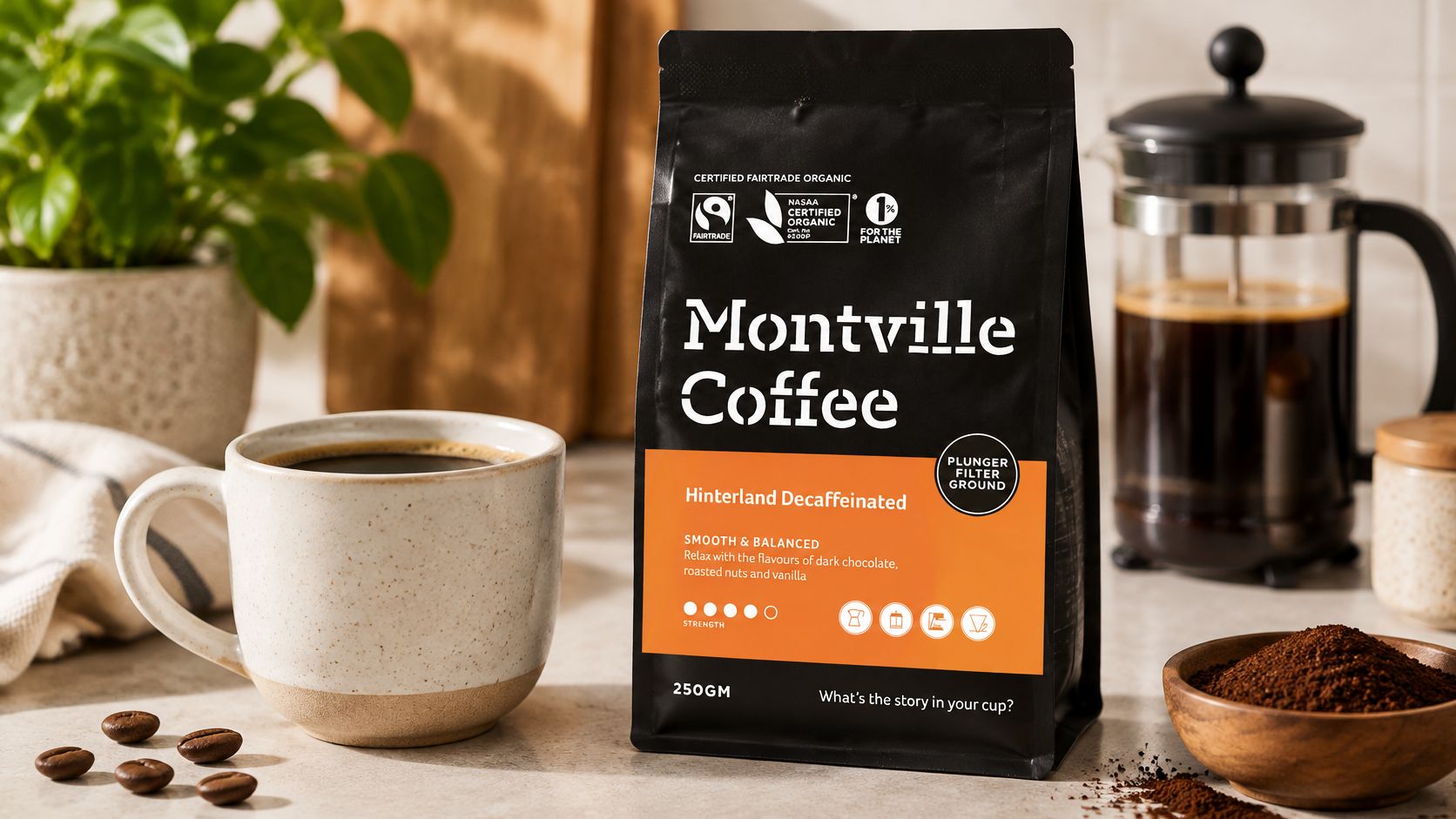
Wallaby Wellness lists Decaf Coffee Ground Plunger Hinterland Blend. Check the product listing for its available details.
Add each drink to your daily total with the caffeine calculator for Australian serves. The 200 mg and 400 mg guidance figures apply to the whole day, not one cup.
A heavy matcha serve can approach or pass a standard coffee; a light one may stay well below it. Powder weight is the key variable, while café drink size and espresso shots can shift coffee totals too.
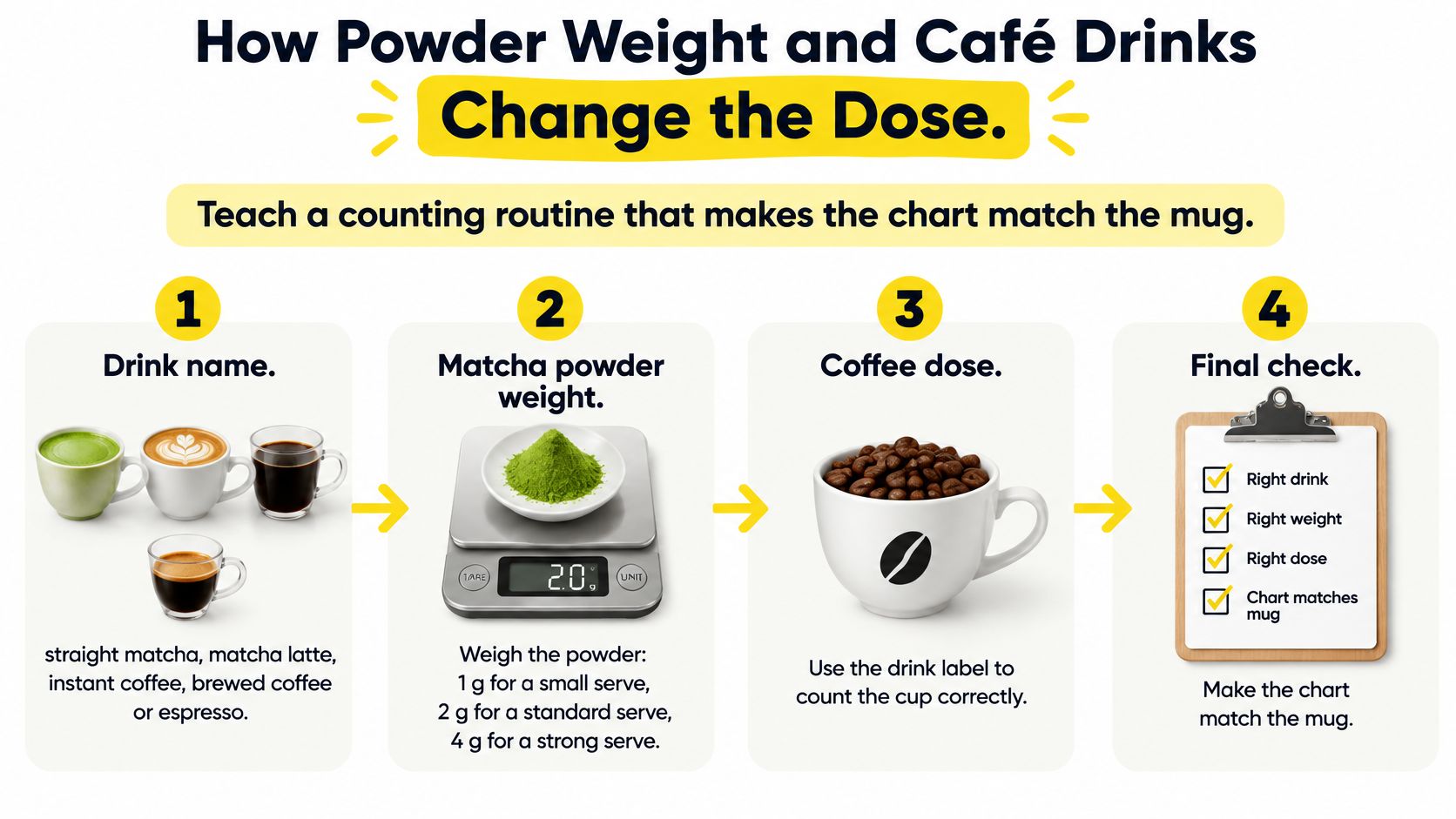
Use this six-step routine when you want a clearer estimate:
The Australian Food Composition Database entry for black coffee lists approximately 33 mg of caffeine per 100 mL, so a 240 mL cup contains roughly 79 mg. Using the working matcha ranges in the chart above, 1 g provides about 19–44 mg, 2 g about 38–88 mg, and 4 g about 76–176 mg.
That spread explains why two drinks with the same name can deliver quite different amounts. A 4 g matcha may sit near or above the coffee figure, while a 1 g serve is considerably lighter.
A café matcha can contain more powder than expected, especially when sweetness softens the taste. Ask how many scoops or grams the drink includes; if the amount is unknown, use the higher end of the standard-serve range for your estimate.
At home, a lighter whisk can prompt a second cup later. Record both serves, since each contributes to the day's total even if neither tastes strong.
For guidance on powder grades and handling, see Buy Me Japan's matcha powder guide. For a side-by-side look at options available locally, browse our guide to choosing matcha powder in Australia.
Note grams or shots, not just cups. One line on your phone can make a rough estimate more useful.
The café drink's sweetness can matter as much as its caffeine. Straight matcha tastes vegetal and savoury, sometimes lightly bitter, while well-whisked powder forms a creamy foam. Some culinary powders also have a mild chocolate-like note beneath the green flavour.
Coffee brings aroma, roast bitterness and body. A short black and a large milky coffee are different drinks, just as straight matcha and a sweetened latte are.
Compare unsweetened matcha with black or lightly milked coffee. This keeps syrup from obscuring the flavours.
Trying each without sweetener helps you separate the drink's flavour from the additions. That distinction can guide a daily choice.
A café matcha latte made with syrup or a sweetened mix may taste more like dessert than tea. Its green colour alone says little about its sugar content.
Freeze-dried fruit mixes, such as strawberry matcha, are sweet by design. At home, check the ingredients and adjust the amount to suit your taste.
Consider a long black with no sugar at 8 am and a sweetened matcha latte at 10 am. The latte adds another sweetened drink to the day. Replacing a sweetened milky coffee with unsweetened matcha at home changes both the sugar and the caffeine dose.
The matcha-to-coffee logging ratio among Australian MyFitnessPal users shifted from approximately 1:74 in 2024 to 1:60 in 2025, according to MyFitnessPal data reported by Mirage News. That ratio suggests matcha is often added for variety, colour or café novelty while coffee stays in the routine.
Before calling a switch a wellness upgrade, compare the drinks as ordered. If the new one needs as much sugar as the old one, the change may be smaller than it seems.
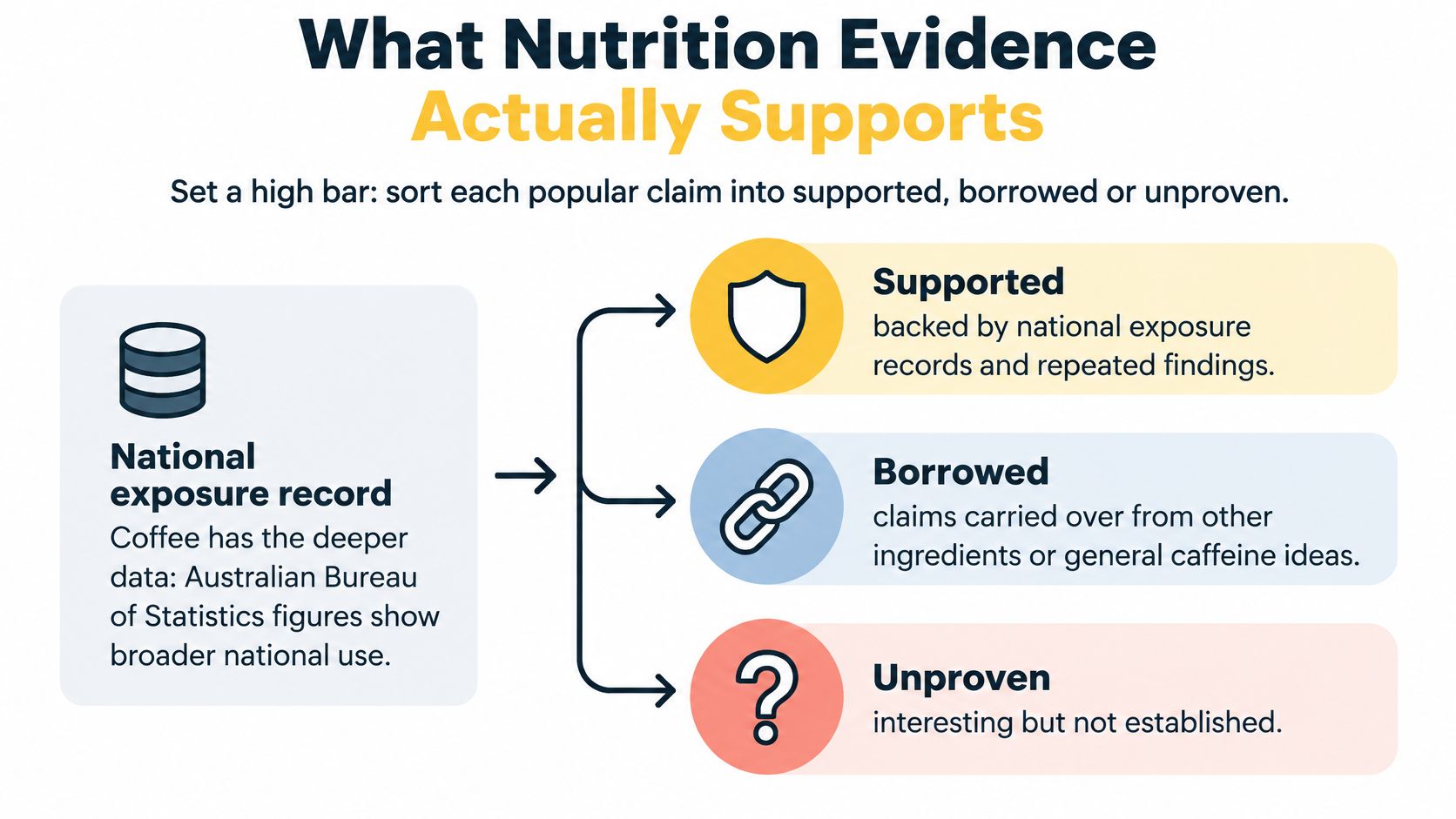
The cup's caffeine dose gives matcha and coffee their clearest evidence-based effects. Claims about matcha's broader health benefits need more caution.
Coffee has the deeper Australian data. The Australian Bureau of Statistics food and nutrients release reported that average daily caffeine intake among Australian adults rose from 158 mg in 2011-12 to 186 mg in 2023. Adults averaged 186 mg, compared with 22 mg among children.
The same release found that coffee and coffee substitutes, tea, soft drinks and flavoured mineral waters together supplied 92.6% of dietary caffeine. Caffeine is part of everyday beverage habits, not limited to specialist products.
Matcha sits within tea in these datasets, so it has no separate national intake figure or health score. That gap makes broad claims about matcha harder to assess.
| Claim | Status | Evidence basis |
|---|---|---|
| Mood and performance changes | Supported from about 37.5 mg | FSANZ review of dietary caffeine |
| Small blood pressure rise, anxiety, sleep disruption | Supported at higher intakes | FSANZ review of dietary caffeine and Healthdirect's information on caffeine |
| Withdrawal when intake drops quickly | Supported | Healthdirect's information on caffeine |
| Antioxidant or anti-inflammation benefit from matcha | Unresolved; claims are often borrowed from green tea generally | No matcha-specific national data |
| Calm focus without a crash | Unproven for matcha | L-theanine anecdotes only |
| Healthier than coffee overall | Unproven | Matcha sits within tea in national data |
The evidence-backed effects in the table relate to caffeine, not to matcha as a special category. Effects vary with the amount consumed, while claims about matcha's unique benefits remain less settled.
Antioxidant and anti-inflammation claims are often borrowed from research on green tea generally. Calm-focus claims rely on L-theanine anecdotes, which do not establish what a particular matcha cup will do.
A borrowed claim may be plausible, but it remains incomplete. Treat it as a possibility, not a settled reason to pay more.
A slower preparation can still make a ritual meaningful. For example, a matcha ritual for Lombok downtime describes using the pause as part of a routine, separate from any health claim.
Match the drink to the job, then check the milligrams in the prepared cup. The same person can reasonably choose coffee at 7am and a light matcha at 2pm.
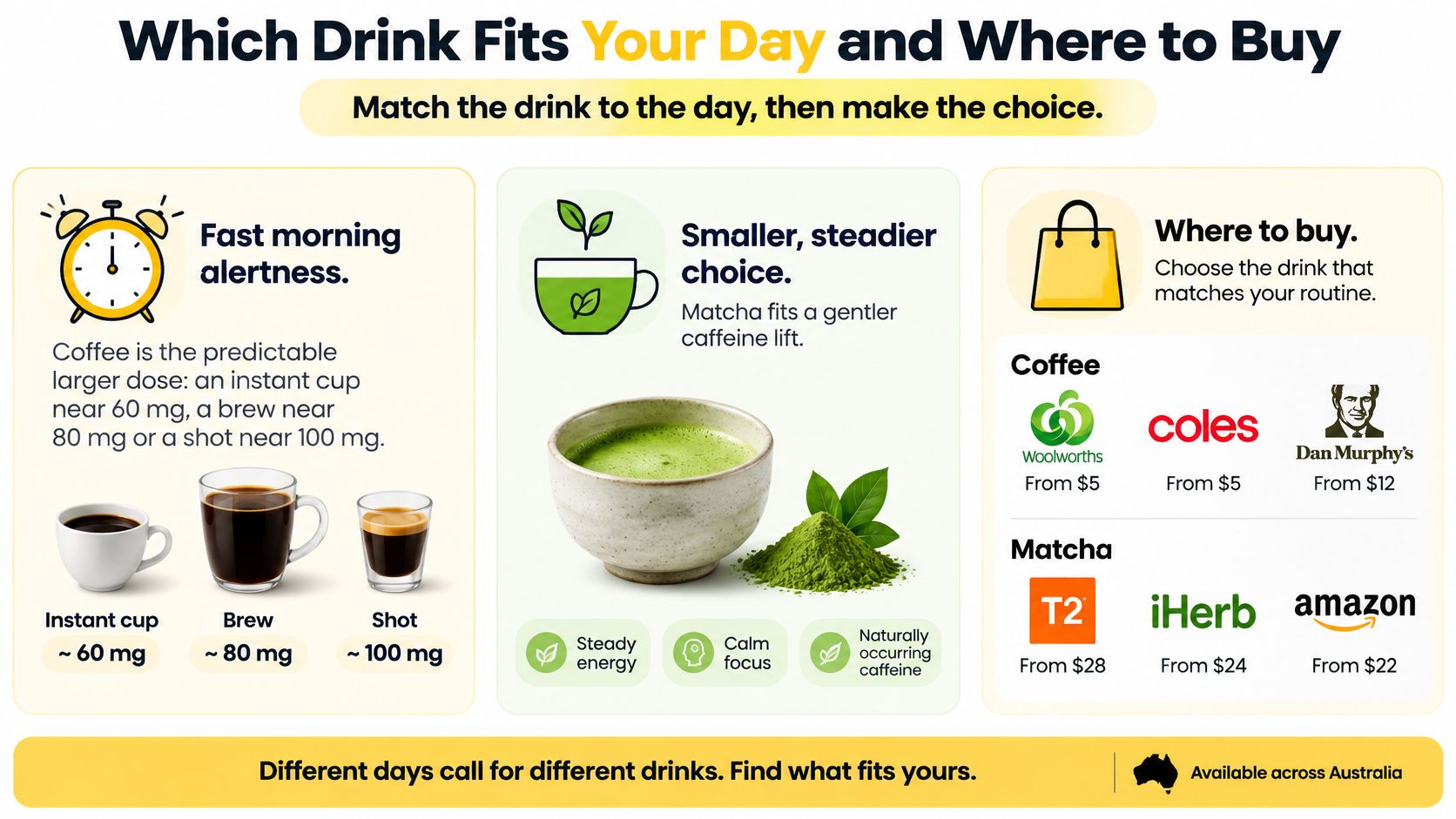
For fast morning alertness, coffee is the predictable larger dose, whether that is an instant cup, a brew or a single shot. For a smaller, adjustable lift, weighed matcha at 1 to 2 g gives you a dial you can turn down.
Training works with either drink if the dose is familiar. A heavier matcha serve can approach or pass a standard coffee, while a light one stays well below it. Don't trial a 4 g experiment before a hard session just because it is green.
Afternoon focus should use whatever fits your remaining caffeine budget. Stacking a full coffee on top of the morning cup is the usual overrun, so a 1 g matcha or one instant can fit better.
If you are anxiety prone or sleep sensitive, treat matcha's gentler reputation as unproven. Use a lower dose of either drink, earlier in the day, and leave a long gap before bed. The guardrails above cover the blood pressure and anxiety cautions, so dose and timing are the parts you control here.
Pregnancy, breastfeeding, and interacting medicines are the cases where a clinician should set your limit. Count every source rather than swapping drinks and hoping.
| Situation | Lean toward | Why | Watch-out |
|---|---|---|---|
| Fast morning alertness | Coffee | Predictable larger dose | A second shot is where overrun starts |
| Afternoon focus | Small matcha or one instant | Fits the remaining caffeine budget | Stacking on the morning coffee is the usual overrun |
| Anxiety or poor sleep | Lower dose of either, earlier in the day | Timing matters as much as drink type | Matcha is not guaranteed to feel calmer |
| Sweet café habit | Home unsweetened or a known mix | You control sugar and dose | A syrup latte is not a straight swap for a long black |
Three decisions cover most readers.
If you would rather step away from caffeine for some serves, an instant coffee alternative for caffeine-free serves lets you keep a hot drink ritual while you test lower doses. That swap gives you a caffeine-free serve while keeping the habit.
The video below walks through the dose comparison visually if the chart rows blur together.
The range includes coffee, caffeine-free drinks, drinking chocolate, matcha, functional drinks and tea, so you can compare categories in one place. Whichever product you pick, confirm the caffeine figure on each product page first, and compare milligrams per prepared serving rather than packet size or flavour name.
Check three things on the label. First, milligrams per gram or per serve. Second, the suggested grams per serve. Third, whether sugar or a sweetened mix is already included. If milligrams are not printed, use the chart ranges and count cautiously.
Free shipping on orders over $150 AUD is available year-round with code FREE150, which suits combining a coffee and a matcha to test both at home. Start with small serves, weigh them for a week, and let your own sleep and focus notes settle the argument.
If caffeine affects your sleep, anxiety or medicines, a clinician can give you a limit that fits your situation.
At Wallaby Wellness we stock coffee, matcha, tea, drinking chocolate, functional drinks and caffeine-free options, so you can weigh a light matcha serve against your usual coffee and compare milligrams per prepared serving before you buy. Visit us to check the caffeine figure on each product page, choose the dose that fits your day, and use code FREE150 for free shipping on orders over $150 AUD.