Best Vitamin C Australia Buying Guide
, 16 min reading time
Compare the best vitamin C Australia options by form, dose and label checks, using the 45 mg adult RDI and the 1,000 mg ceiling.
There's no single best vitamin C in Australia: clearly labelled ascorbic acid or an ascorbate at a modest dose is the practical default, and 1,000 mg a day is a ceiling for supplemental intake, not a target.
The reason to check your diet before buying is straightforward. According to the Australian Bureau of Statistics' food and nutrient results, average vitamin C intake fell from 100 mg per person a day in 2011–12 to 83 mg in 2023, a decline of about 17%. That's a reason to look at what you eat, not a reason to automatically buy the strongest tablet.
My buying rule is simple: choose the smallest clearly declared dose that fills a real food gap, in a form you can comfortably take. Judge the pack on its contents and directions, not its fruit photography, premium delivery system or oversized strength claim.
No single product is best for every adult. Start with the form, then compare the declared vitamin C amount and the complete ingredient list.
Vitamin C forms compared for Australian shoppers
| Form | Best suited to | Watch-out |
|---|---|---|
| Ascorbic acid | Everyday capsules and powders when you want a straightforward value pick | Acidic; a larger dose can be harder to tolerate |
| Sodium ascorbate | People who want a buffered powder or capsule | Adds sodium, so it's a poor casual pick on a sodium-restricted diet |
| Calcium ascorbate | People who want buffering and can accommodate extra calcium | Count its calcium alongside food and other supplements |
| Liposomal or ascorbyl palmitate | Shoppers deliberately choosing a liposome delivery system or a fat-soluble derivative | Paying for a specialised format doesn't establish better results |
| Acerola, camu camu or other fruit concentrate | People who prefer a food-based powder | The weight of fruit powder isn't the same as its declared vitamin C content |
Ascorbic acid is my default shortlist choice. You're buying a direct, recognisable ingredient rather than paying primarily for a fruit story or delivery-system claim. Compare actual prices before assuming any particular brand or powder is cheapest.
A powder can suit someone who dislikes capsules, but only when its measuring instructions are clear. Don't estimate a dose with a kitchen spoon when the product specifies a supplied scoop or a measured weight.
Sodium ascorbate and calcium ascorbate are alternatives when you want a buffered form. Buffering changes the formulation, but it doesn't remove the need to inspect the whole label. With sodium ascorbate, check sodium; with calcium ascorbate, check how the added calcium fits your other products.
If plain ascorbic acid upsets your stomach, reconsider the dose before paying for a more elaborate formula. Changing the form and reducing an unnecessarily large serving are different decisions.
Liposomal vitamin C and ascorbyl palmitate shouldn't be treated as interchangeable. The former describes a delivery approach; the latter is a vitamin C derivative. Buy either because you've deliberately selected that formulation, not because premium packaging has convinced you standard vitamin C is inadequate.
Fruit concentrates need an equally hard look. A prominent acerola or camu camu amount may describe the extract or powder weight, while the vitamin C declaration tells you what matters for your intake. If that declaration is missing, choose a more transparent product.
Practical rule: Pay for a suitable form and a usable dose, not the most impressive ingredient name.
Topical skincare is a separate purchase: Loyaltie's vitamin C serum with bakuchiol is a skincare example, not an oral supplement to compare using this table.
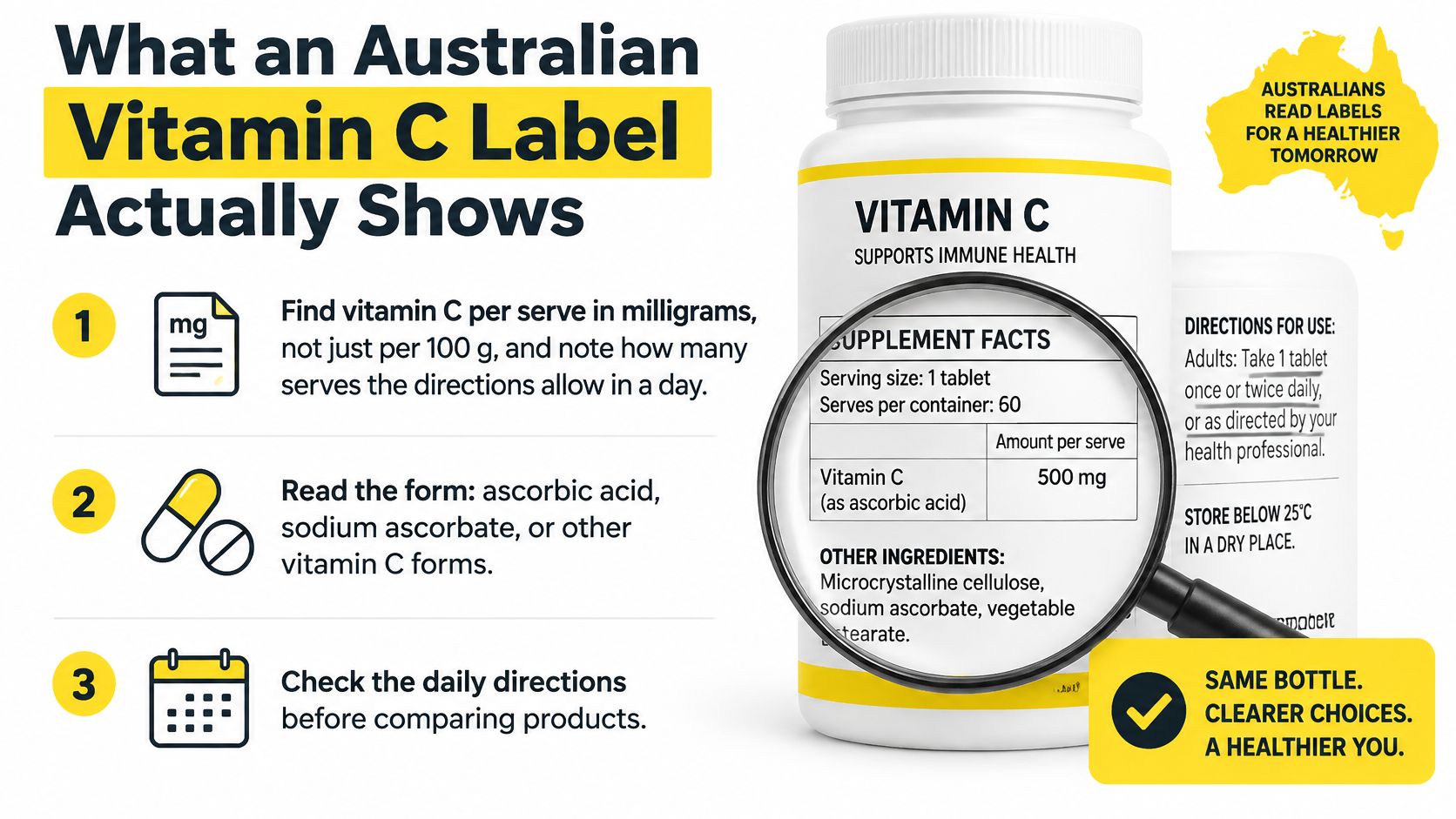
Circle a form first. Then find vitamin C per serve on the label, rather than accepting the front-of-pack claim as the dose.
In 2023, 8.2% of Australians aged 2 years and over, about 2.0 million people, had inadequate vitamin C intake from food and beverages. The ABS usual nutrient intake estimates report a rise from 2.5% in 2011–12.
An adequate population average can still hide people whose food intake falls short. National figures describe groups, not an individual's diet.
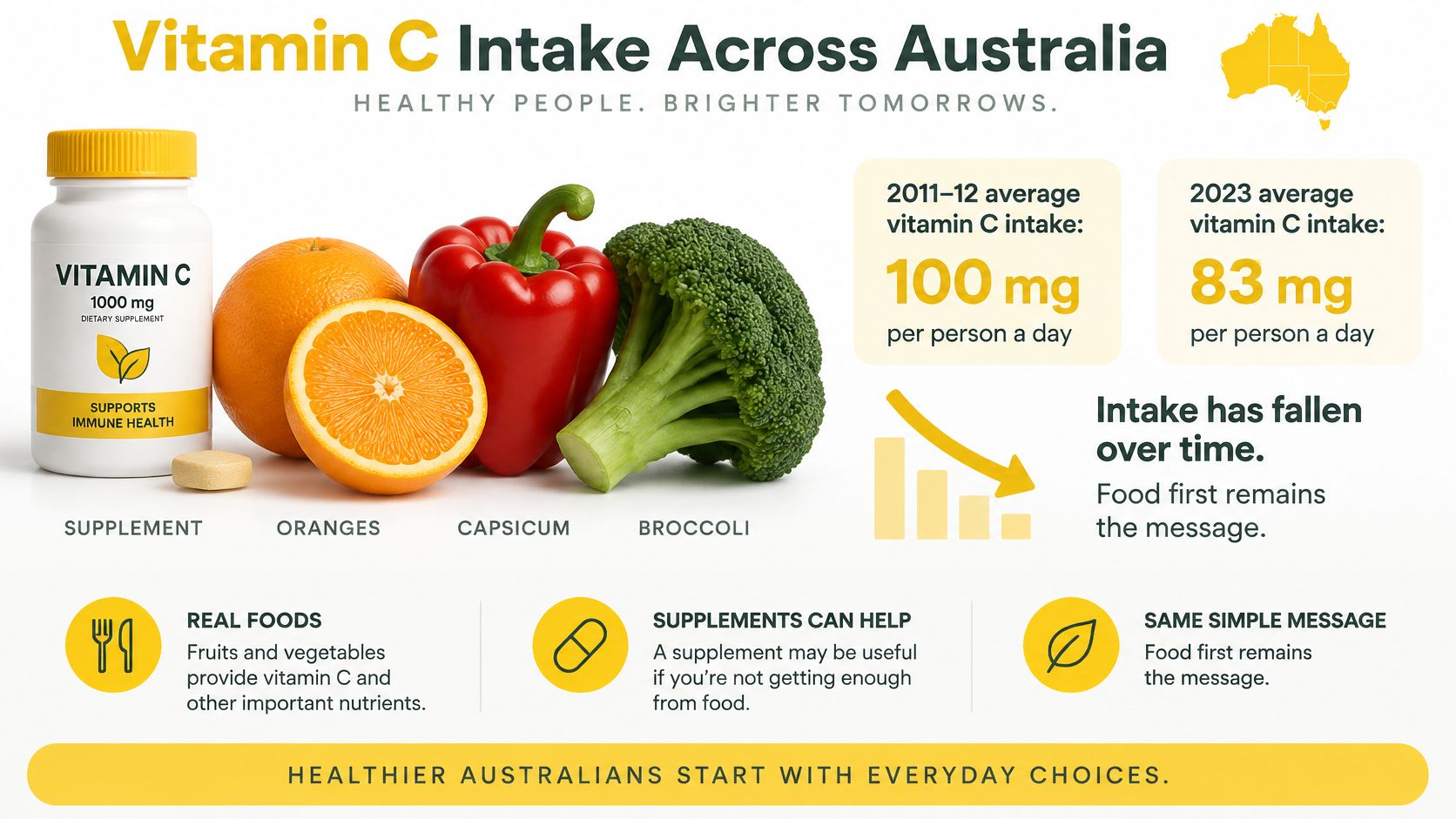
The ABS usual nutrient intake estimates report the 2023 figures by sex and age, alongside average intake and the adult estimated average requirement. The socioeconomic comparison uses energy-adjusted apparent intake, not a direct estimate of each person's usual intake.
Australian vitamin C intake and inadequacy figures
| Measure | Value |
|---|---|
| Inadequate intake, 2011–12 | 2.5% of Australians aged 2 and over |
| Inadequate intake, 2023 | 8.2% of Australians aged 2 and over, about 2.0 million people |
| Inadequate intake by sex, 2023 | Males 9.2%; females 7.1% |
| Inadequate intake by age group, 2023 | Adults 9.0%; children 5.1% |
| Average daily intake | 100 mg in 2011–12, falling to 83 mg in 2023, down 17 mg or about 17% |
| Adult estimated average requirement | 30 mg per day |
| Intake by socioeconomic quintile, 2023–24 | 93.6 mg per 10,000 kJ in the most disadvantaged quintile versus 118.5 mg in the least disadvantaged |
The figures can guide population-level decisions, but they cannot identify who needs more vitamin C. The socioeconomic gap also puts food access, shopping habits and affordability in view. A supplement choice should fit a real dietary shortfall, not a demographic average.
Fruit and vegetable juices or drinks were the leading contributors in the ABS food-source breakdown, followed by fruit products and dishes. Vegetable-based mixed dishes and broccoli-type vegetables also contributed. These are reported sources of vitamin C, not a reason to replace whole vegetables with juice.
For practical food-shopping ideas, read our guide to superfoods and everyday wellness.
Australian vitamin C targets and ceilings
| Situation | Daily figure | What it means | How to use it when buying |
|---|---|---|---|
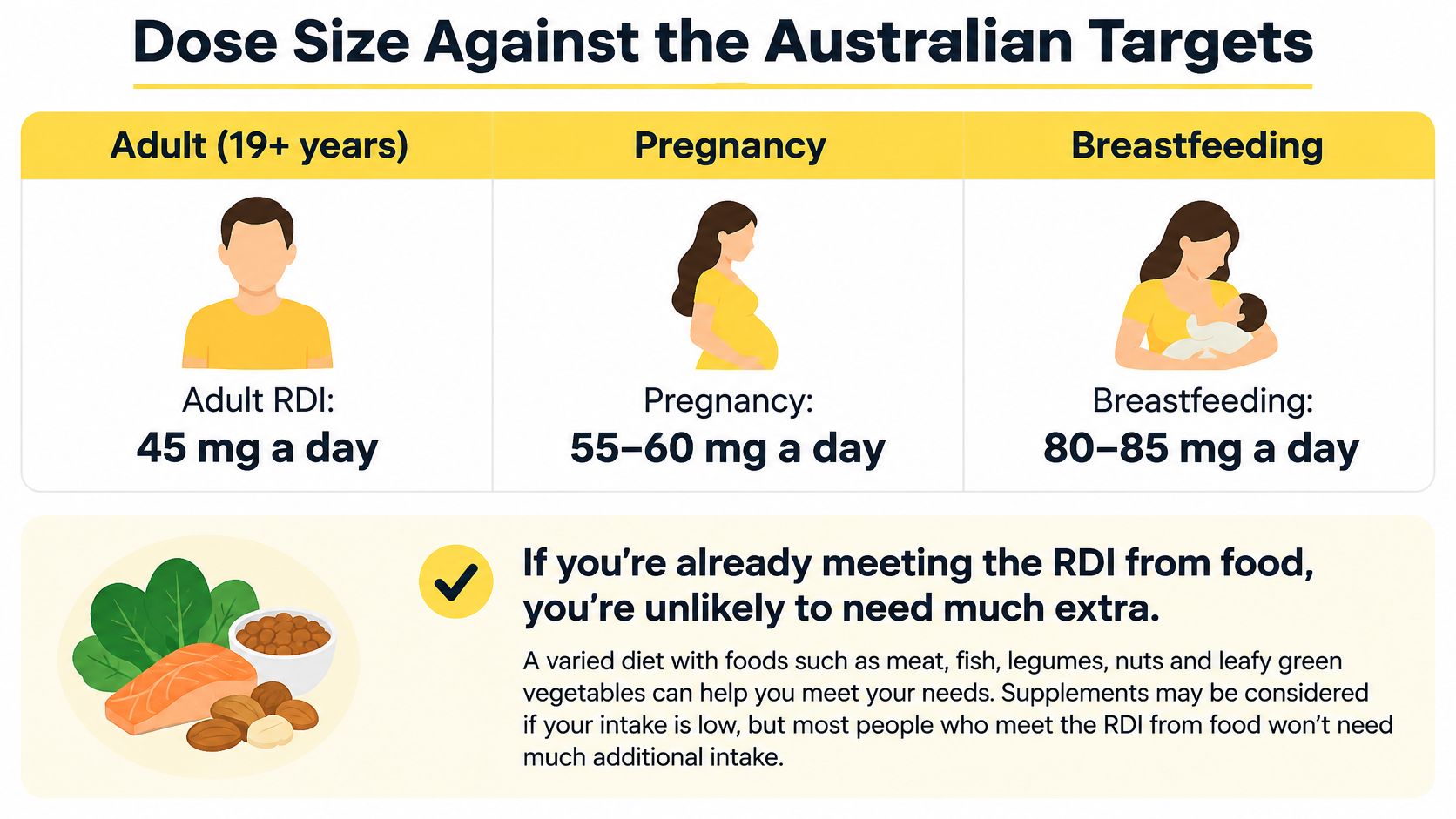
| Adults | 45 mg RDI | Recommended dietary intake for adults | Don't choose a product just because its number is larger |
| Pregnancy | 55–60 mg | A life-stage increase, not a megadose instruction | Confirm supplements with your maternity care provider |
| Breastfeeding | 80–85 mg | A higher dietary requirement | Review your existing supplement plan before adding another product |
| Prudent supplemental ceiling | 1,000 mg | A prudent limit, not a goal | Don't use higher-dose regimens as routine wellness |
| Very low intake | Under about 7–8 mg; sustained intake below roughly 10 mg for about a month | Deficiency risk; scurvy can develop with sustained very low intake | Seek clinical care rather than self-selecting a high-strength product |
The life-stage and deficiency figures in the table come from Healthdirect's vitamin C guidance, which gives an adult RDI of 45 mg/day, increasing to 55–60 mg/day during pregnancy and 80–85 mg/day while breastfeeding. It also advises that people meeting the RDI are unlikely to need supplementation.
The Australian and New Zealand Nutrient Reference Values identify 1,000 mg/day as a prudent upper limit for supplemental vitamin C, although a formal tolerable upper intake level couldn't be established with certainty. Against those targets, a 500 mg product is already substantially above the adult RDI, while a 1,000 mg product reaches the prudent supplemental ceiling.
These are different kinds of numbers. An RDI is a dietary target; a prudent supplemental ceiling isn't a recommended daily dose. Treating them as interchangeable is how a modest top-up becomes an unnecessary high-strength routine.
The life-stage comparison makes that distinction visible.
Before upsizing, do a plate check. Look for regular sources such as citrus, kiwifruit, capsicum, broccoli and berries, rather than assuming a day without orange juice is a vitamin C shortfall. Exact contributions depend on the food and serving, so use a food record or ask a dietitian if you need a reliable estimate.
Then check the cupboard. Multivitamins, effervescent drinks, fruit powders and combination supplements can all contribute supplemental vitamin C. Add their declared daily amounts before selecting another bottle.
A generally well-fed adult may be best served by skipping the pill. Someone with a genuine food gap needs a suitable top-up, not an automatic maximum-strength product.
Excess supplemental vitamin C can cause abdominal cramps, diarrhoea and flatulence, and kidney-stone risk warrants particular care. Don't push through persistent symptoms because the pack presents the product as an everyday wellness essential.
If your food intake is severely restricted, the problem deserves more than a shopping decision. A clinician can assess the reason, investigate possible deficiency and decide whether a treatment dose is appropriate.
Turn the pack over and run five checks before comparing brands.
Use this checklist with the pack or product-page label open.
The Therapeutic Goods Administration's explanation of vitamin regulation states that most vitamins are listed medicines, which aren't evaluated by the TGA for efficacy before entering the market. They must use permitted ingredients and meet requirements covering safety, quality, manufacturing and permitted claims.
An ARTG listing is a compliance check, not evidence that one suitable formula works better than another. A buffered, liposomal or fruit-based label alone does not establish superior results.
An ARTG number is a compliance ticket, not a winner's medal.
Keep health claims in proportion. A permitted wellbeing indication does not promise disease prevention or treatment, and regulation varies with ingredients and claimed use.
Gummies and effervescents can be easier to take. Check their ingredients: chewable formats may contain sugar or sweeteners, while dissolving products may declare sodium.
Once the formulation fits, compare cost per usable serving and cost per declared milligram. The second measure is a comparison tool, not a reason to buy more vitamin C than you need.
Reject a pack if its vitamin C amount is unclear, its directions are confusing or its cure language exceeds its permitted indications. If an online listing hides the back label, get a readable label before paying.
Choose a different product only when it better fits your circumstances. If you're considering sodium ascorbate, check the sodium amount per serving against any dietary restriction, and ask a pharmacist if you're unsure. Calcium ascorbate also adds a mineral, so include it in your overall intake if you already use a calcium supplement or follow a clinician-managed plan.
Kidney stones or kidney disease, iron-overload conditions and clinician-directed treatment all warrant a conversation with your GP or pharmacist before changing your supplement routine. Bring the proposed product and your current supplement list. Your medical history and the dose you plan to take matter more than the brand name.
Persistent diarrhoea or stomach pain is a reason to review the amount and formulation, not to push through discomfort. If symptoms continue, seek advice. Bleeding gums can have several causes, so arrange a clinical assessment rather than using a high-strength tablet to diagnose a vitamin C problem.
Intravenous vitamin C is a medical treatment, not a routine oral supplement. Discuss its proposed use and risks with a qualified medical practitioner.
Don't split an adult high-strength capsule to estimate a child's dose. If a child needs supplementation, choose an age-appropriate product with professional guidance, or focus on suitable foods.
During pregnancy or breastfeeding, review your prenatal or postnatal products as a whole before adding another supplement. Combination shopping calls for the same check: learn about zinc's health properties, then decide whether either nutrient suits your needs rather than assuming they belong together.
If plain ascorbic acid causes discomfort, ask about a lower serving or a buffered form. The practical choice is the smallest clearly labelled dose that fills a genuine gap in your diet, in a form you can tolerate.
Start with a seller that makes the complete label easy to inspect. A familiar shopfront is useful, but it shouldn't replace checking the actual product.
Pharmacies are a practical route when you want a pharmacist to review medicines, medical conditions or competing formulations. Supermarkets can suit a straightforward repeat purchase, although you should check the current shelf rather than assume a particular form is stocked.
Specialist online catalogues let you inspect powders, capsules and combination products without relying on shelf space. At Wallaby Wellness, we sell vitamin C supplements alongside vitamin D, magnesium, zeolite and colloidal minerals. Apply the same pack checks to our catalogue that you'd apply anywhere else.
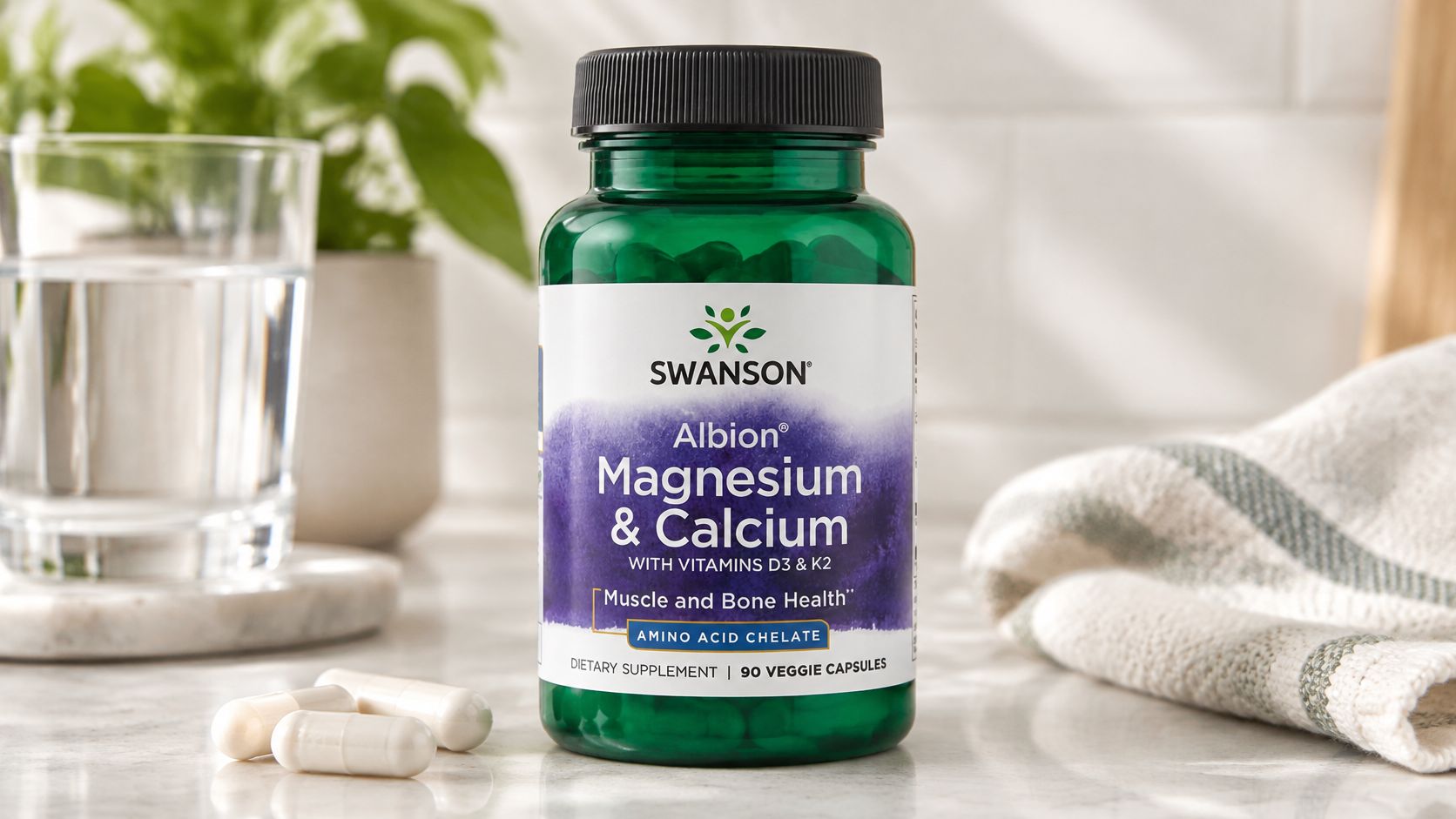
A broad supplement catalogue also contains products that aren't vitamin C substitutes. For example, Swanson Albion Chelated Magnesium & Calcium 2:1 90 Veg Capsules is a magnesium and calcium formula with vitamins D3 and K2, not an oral vitamin C recommendation.
The catalogue reference image below illustrates that category distinction, not a vitamin C shortlist pick.
For an overseas marketplace order, calculate the delivered cost, including shipping and any applicable taxes. Check that you can identify the seller, read the label and establish what product will arrive.
Use a short final comparison:
Popularity doesn't settle quality. The Australian Bureau of Statistics' dietary supplement results found that vitamin and/or mineral supplements were the most common supplement category in 2023, taken by 29.7% of people. Our overview of Australian supplement industry statistics provides broader shopping context, not a reason to follow the crowd.
Shortlist suitable products before comparing value. A cheaper milligram isn't useful if the formulation, dose or directions are wrong for you.
Run every candidate through four gates, in order. Use them to make the final call, not to repeat the full checks covered earlier.
Gate one: is there a reason to buy? Base the decision on the food gap you identified, not the bottle's claims.
Gate two: does the product fit? Choose a form and serving that suit your stated need. Keep the comparison to the candidates that meet the dose and label checks already covered.
Gate three: is this a decision to make with a clinician? If your circumstances call for medical advice, get it before purchasing. Bring the product details and your supplement list.
Gate four: can you account for the purchase? Check that the pack and seller details are clear, then compare the cost of the serving you intend to take.
Before checkout, record the chosen form, vitamin C per daily serving and seller. Add a short reason for taking it, such as a limited food pattern you're working to improve.
That note gives you a practical basis for reviewing the purchase later. If the reason no longer applies, don't keep buying by habit.
If you can't state a clear reason for taking a supplement, keep your money and improve the food shop instead.
Wallaby Wellness sells vitamin C supplements alongside other vitamins, minerals and wellness products. Compare the available labels and check the declared daily dose before adding a product to your basket at Wallaby Wellness.