Vitamin B for Energy: What Works and What Doesn't
, 13 min reading time
Learn how vitamin B for energy really works, which B vitamins matter, who needs more and when fatigue needs a blood test, based on Australian guidance.
If B vitamins are the nutrients that turn food into energy, why doesn't a B complex make you feel more awake?
That gap trips up a lot of people standing in the supplement aisle. B vitamins are essential for energy metabolism, and Australian health authorities say so plainly. What they don't do is supply energy themselves. They're the tool, not the fuel, and a tool you already have in sufficient supply doesn't work harder because you buy another one.
So the useful question isn't whether B vitamins matter for energy. They do. It's whether your body is short of them in the first place, because that's the only situation where topping up changes how you feel.
The distinction that matters: correcting a real shortfall can change how you feel. Adding B vitamins on top of an adequate intake generally can't.
The short answer: B vitamins supply no kilojoules and they don't act like stimulants. They work as coenzymes, small helper molecules that let enzymes convert carbohydrate, fat and protein from your food into cellular energy, as healthdirect's guide to vitamin B and your health sets out.
Six of them carry most of the load, and the Australian adult reference intakes are modest. Keep these figures, because they're smaller than almost every supplement label implies.
B vitamins, energy roles and adult daily intakes in Australia
| Vitamin | Main role in energy | Adult daily intake (Australia) |
|---|---|---|
| Thiamin (B1) | Carbohydrate metabolism and pyruvate processing | 1.1-1.2 mg |
| Riboflavin (B2) | Electron transfer in reactions that generate ATP | 1.1-1.3 mg |
| Niacin (B3) | Electron carrier in ATP-producing reactions | 14-16 mg NE |
| Vitamin B6 | Amino acid and glycogen processing | 1.3 mg |
| Folate (B9) | Cell division and red blood cell formation | 400 µg DFE |
| Vitamin B12 | Red blood cell formation and nerve function | 2.4 µg |
Notice the units. These are milligrams and micrograms, not grams. Vitamin B12 at 2.4 µg a day is a speck of dust on a knife tip, which tells you how efficiently the body recycles and uses these nutrients rather than how much you need to swallow.
Food supplies them without much effort. Wholegrains, fortified cereals, legumes, nuts, meat, eggs, dairy, fish and fortified plant milks all contribute, which is why a mixed diet generally covers the list.
Before you buy: write down one ordinary day of food, then check whether your diet already contains a wholegrain, a legume, a dairy or fortified plant milk, and a protein food. If it does, you're probably not the person a high-dose product was designed for.
If injections have come up in conversation, it helps to know what a B12 shot can and can't do before you book one, and this plain-English explanation of B12 shot facts for tired adults covers the difference between treating a deficiency and chasing a boost.
A breakfast of wholegrain toast, a boiled egg, almonds and fortified soy milk brings together carbohydrates, protein, fats and B vitamins. Each has a different role as food is digested and used by the body.
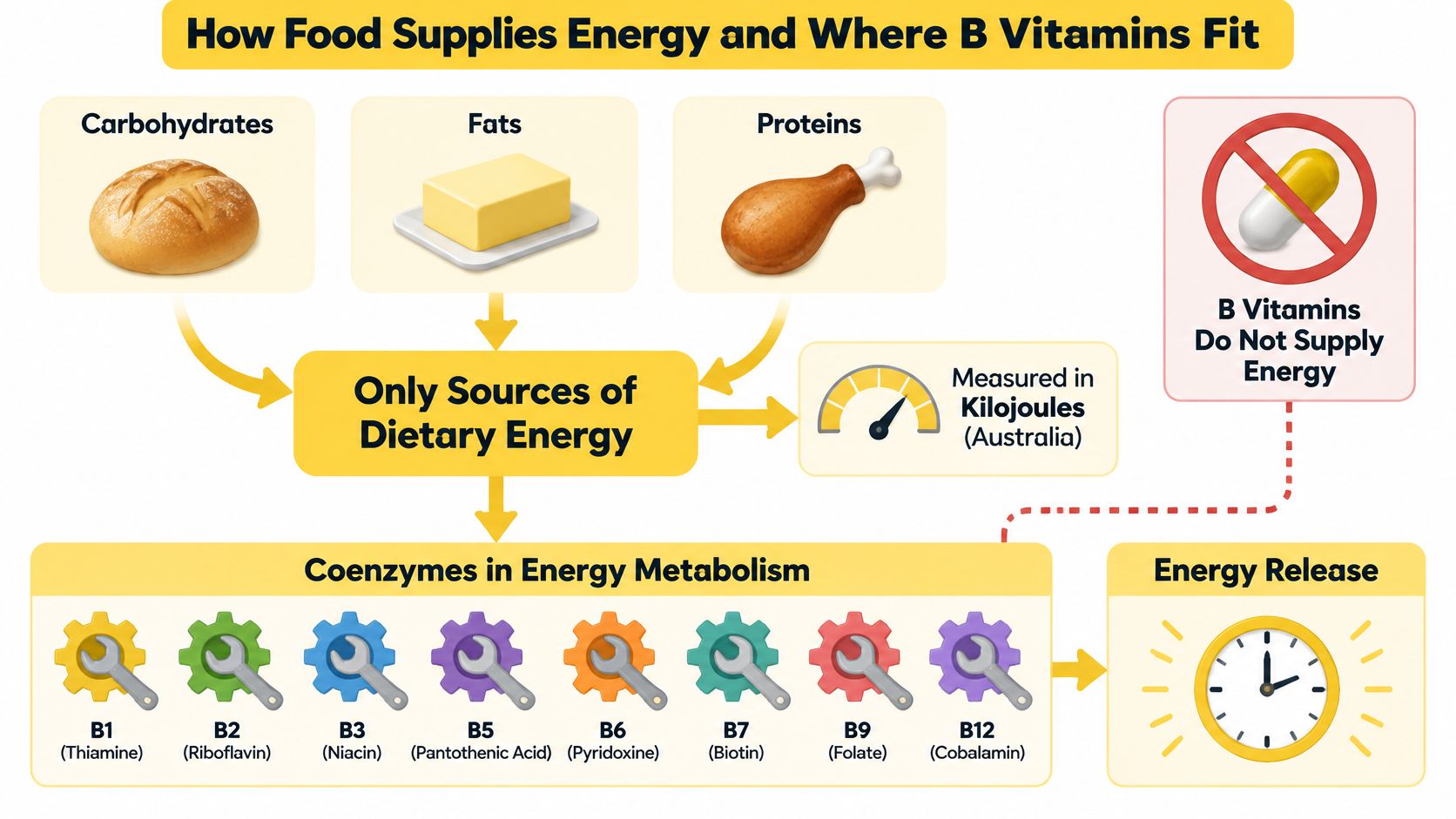
The nutrient reference framework accounts for differences in people's needs, including age and sex. So a single intake target does not apply to everyone.
A varied diet supplies both energy-yielding foods and the nutrients involved in processing them. If someone has a B vitamin shortfall, correcting it can help restore normal function; extra B vitamins are unlikely to make someone feel more energetic when their intake is already adequate. Persistent tiredness needs attention to its cause, not just a change in supplements.
For food ideas, these suggestions for superfoods that support energy, immunity and wellness focus on what can go on the plate.
Start with food: Eat a varied day first, then consider whether a supplement could cover a specific dietary gap.
A B complex bought during a stretch of broken sleep may seem like a straightforward fix. But if your B vitamin intake is already adequate, the extra dose has no shortfall to correct. B vitamins help enzymes carry out steps in energy metabolism; taking more does not make those steps run faster just because you feel tired.
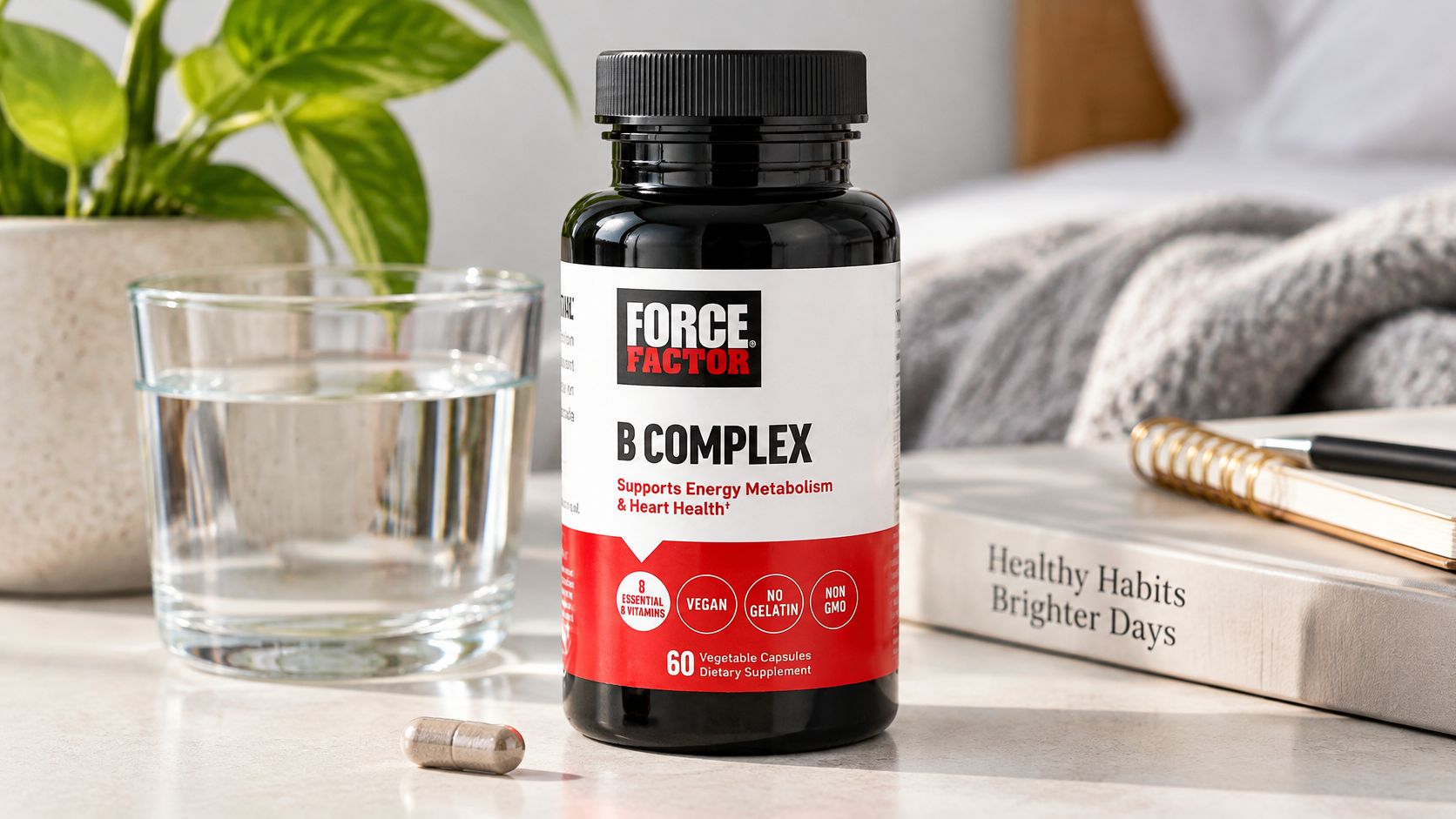
That distinction separates correcting a deficiency from expecting a general boost. If a B vitamin is low, replacing it may help address symptoms linked to that deficiency. If levels are adequate, a supplement is unlikely to make you feel more alert.
Sleep disruption and low mood can both leave you feeling flat, even while your body continues to make energy from food. Persistent tiredness can have other explanations too, so it is worth finding the cause rather than assuming you need a supplement. The final section explains how to approach that question.
Healthdirect identifies B12 deficiency as the most common vitamin B deficiency in Australia and links it with fatigue, weakness, anaemia, neurological symptoms, and memory or balance problems, as healthdirect's page on vitamin B deficiency explains. A B12 shortfall is therefore a specific possibility to take seriously, not a reason to expect every B complex to relieve tiredness.
Your cells can make ATP, the usable energy they need, while you still feel tired. Cellular energy production and alertness are related, but they are not the same thing: feeling alert also depends on factors such as sleep and mood.
B vitamins support the processes that release energy from food. They do not reliably change how energetic you feel when your intake is already adequate. If tiredness persists without a clear explanation, start by asking what might be causing it, then consider whether a B vitamin shortfall is part of the answer.
A shortfall is more likely when diet, absorption or certain medicines affect how much B vitamin reaches the body. These are the groups most likely to need a closer look.
Groups at higher risk of B vitamin shortfall
| Group | Most at-risk B vitamin | Practical step |
|---|---|---|
| Strict vegans | Vitamin B12 | Use a fortified food or B12 supplement consistently and discuss testing with a GP |
| Adults over 60 | Vitamin B12 | Ask a GP about B12 testing if tiredness or numbness persists |
| Long-term metformin users | Vitamin B12 | Ask a GP whether periodic B12 checks are appropriate |
| Coeliac or inflammatory bowel disease | Vitamin B12 and folate | Get clinician review of absorption and diet |
| Pregnant or planning pregnancy | Folate (B9) | Follow clinician advice on folate intake |
| Regular heavy alcohol use | Folate and thiamin (B1) | Reduce alcohol and include wholegrain foods |
Strict vegans have limited reliable natural plant sources of B12. Australian health guidance recommends a B12 supplement for people following a strict vegan diet, and notes that vegan children may also be vulnerable if their diets are not carefully planned. A plant-based diet can also make iron worth considering; see these plant-based iron sources.
B12 supports blood cell formation and nerve function. A deficiency can cause megaloblastic anaemia and neurological impairment, which may involve tiredness, reduced exercise tolerance or cognitive difficulty, as explained in healthdirect's vitamin B12 test guide.
For anyone eating a plant-based diet, consistent intake from fortified foods or a supplement is more useful than occasional use. A GP can advise whether testing is appropriate, particularly if fatigue, numbness, balance problems or gut disease are present.
Metformin can affect B12 levels over time, so long-term users can ask their GP whether periodic checks are appropriate. A broad B complex is not automatically a better choice: B6 from supplements, sports products and energy drinks can add up, and excessive supplemental intake can cause peripheral neuropathy. Compare labels rather than stacking products.
For a straightforward B12 option, Wallaby Wellness sells Swanson Vitamin B12, 500 mcg, 100 Vegan Capsules, which provides cyanocobalamin in a vegan capsule.
Before taking a B vitamin, check what each product contains. A label is like a recipe: the overall amount matters, but so do the individual ingredients and their quantities.
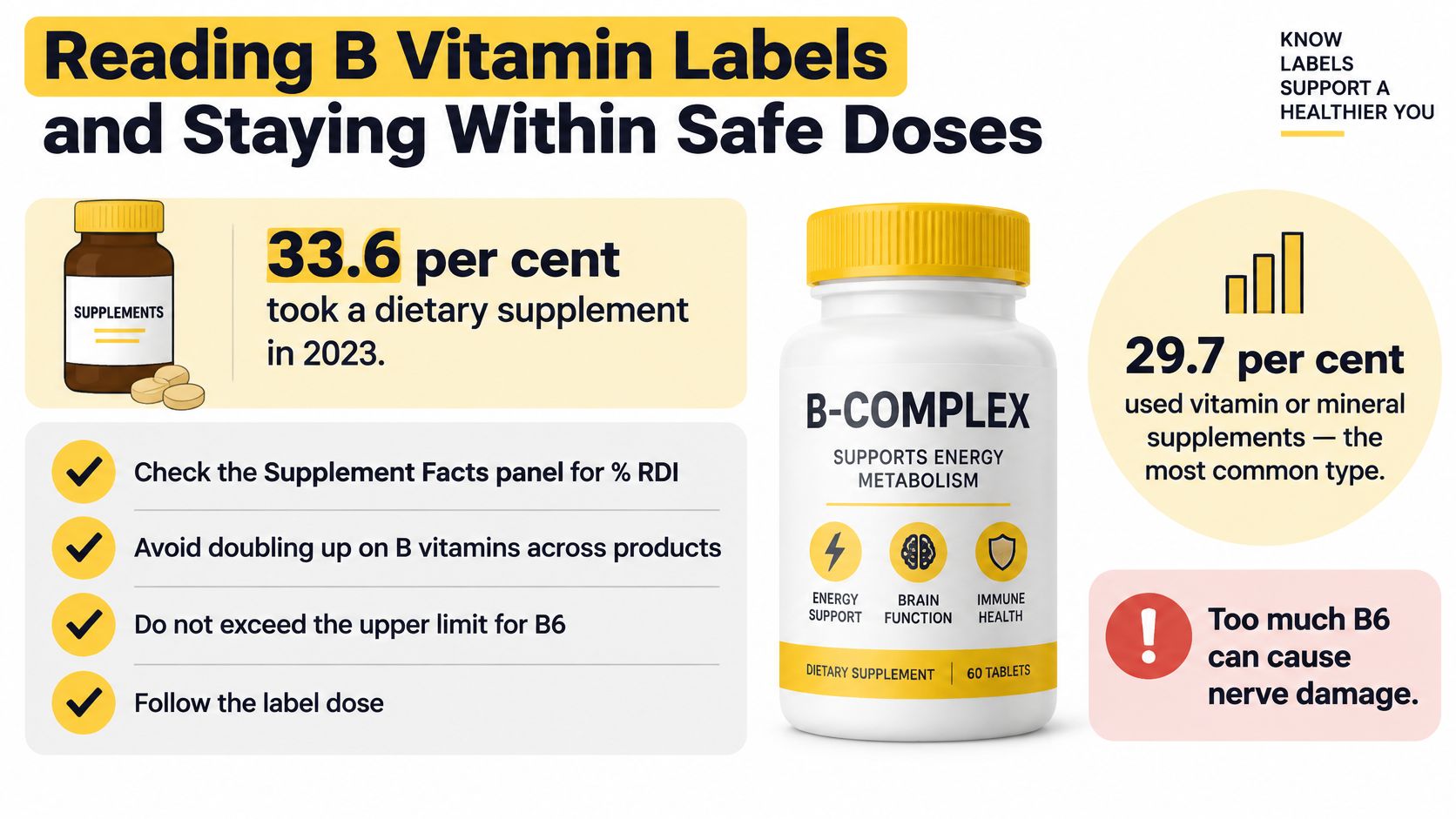
Amounts across products are easy to overlook. If you use a multivitamin, B complex and sports product together, a pharmacist can help you review their labels and add up the total.
For a visual walkthrough, the video below shows how to read a supplement panel from top to bottom.
For another explanation of the individual vitamins in a complex, Yuve's breakdown of B complex describes them one at a time.
Wallaby Wellness sells Force Factor B Complex 60 Vegetable Capsules, a vegan, non-GMO option in a gelatin-free capsule. Check its label and follow the suggested use. Ask a health professional for advice if you're pregnant, nursing, taking medication or managing a medical condition.
If tiredness has lasted several weeks without an obvious cause, start with a health assessment, not a supplement. A clear timeline and a list of what you take can help make the conversation with your GP more useful.
Note when the tiredness began. A short spell after disrupted sleep may have an obvious trigger. If it continues without one, record how it affects your day and whether anything else has changed.
List your medicines, supplements, sports products and energy drinks, along with your alcohol intake. Bring that list to your appointment. The earlier section on who may fall short on B vitamins covers factors that can affect B12 levels.
Ask your GP which checks are appropriate. A blood count, vitamin B12 and folate levels, iron studies and thyroid function can help investigate persistent tiredness. The results matter because different causes call for different responses.
Seek prompt medical review: numbness or pins and needles, balance trouble, shortness of breath, or unexplained weight loss warrant assessment rather than a supplement trial.
Normal results mean that the tests have not identified an explanation. They do not show that a higher B-vitamin dose is needed. Discuss what to check next with your GP. If you are in your forties and fatigue appeared alongside other changes, read about fatigue during perimenopause.
If a shortfall is confirmed, ask which vitamin, dose and form are appropriate, and how long to take it. A plan based on your results is more useful than choosing a product by its front label.
For readers interested in how cells produce energy, this explanation of mitochondrial support for lasting energy explores the cellular side of the topic.
Wallaby Wellness sells vitamins and minerals, protein and amino acids, collagen, probiotics, adaptogens, sleep and stress supplements, and weight and metabolism products, organised by health goal. Browse Wallaby Wellness if a supplement has been matched to a specific need.