Buy Magnesium Glycinate Australia: A Label Checklist
, 14 min reading time
Buy magnesium glycinate Australia safely: check AUST L numbers, elemental magnesium per serve, label warnings and online ordering details before you checkout.
You're comparing two bottles of magnesium glycinate. The headline milligram figures look similar, but one label describes a compound weight while the other lists the magnesium you receive. Both sound reassuring, yet neither front label tells you enough to choose.
If you're looking to buy magnesium glycinate in Australia, start with the back of the pack. A useful purchase decision comes from matching the product's Australian regulatory details, elemental magnesium amount and directions to your circumstances, not choosing the biggest number.
For a magnesium product supplied as a medicine, Australian regulatory status is a foundational check. The Therapeutic Goods Administration's listed medicines guidance states that listed medicines must be included in the Australian Register of Therapeutic Goods (ARTG) before supply, but aren't individually assessed before they enter the market.
Sponsors must certify compliance with relevant requirements, and the TGA can conduct post-market checks. Registered complementary medicines follow a different pathway involving pre-market assessment for safety, quality and efficacy. An Australian-looking website alone doesn't tell you which pathway a product follows.
Use the complete label, not just the main product photograph.
| Check | Where to find it | What good looks like |
|---|---|---|
| AUST L or AUST R number | Front or back of pack, product page | Present and searchable in the ARTG |
| Elemental magnesium per serve | Supplement facts or active ingredients panel | Stated in mg of magnesium, not only compound weight |
| Serving size and daily maximum | Directions panel | Clear maximum number of servings per day |
| Ingredient form | Supplement facts or active ingredients panel | Names magnesium glycinate or bisglycinate, plus other forms in the blend |
| Warning statements | Warnings panel | Laxative-effect and medicine-interaction wording where required |
| Sponsor details | Back of pack or listing | Company name and an Australian contact |
Match the register entry to the actual product and sponsor. Don't assume that a number copied into a product description belongs to the bottle pictured.
Watch for these red flags:
Practical rule: If you can't verify the product's identity and dose, don't resolve the uncertainty by trusting its reviews.
Digestive comfort also deserves attention when comparing supplements. Our guide to gut health supplements in Australia offers broader context, but it doesn't replace checking an individual magnesium label.
Run the ARTG search before reading the marketing copy. Then work through the remaining label checks in order.
Think of magnesium as a passenger and glycine as the taxi carrying it. In magnesium glycinate, the mineral is bound to glycine, an amino acid, in a form described as a chelate. The analogy explains the pairing, not how much magnesium your body will absorb.
This illustration shows that relationship.

Magnesium oxide is a different mineral salt. Citrate, lactate and malate are other forms you may encounter on shelves, each with a different chemical partner. They shouldn't be treated as interchangeable just because the front label says magnesium.
Glycinate is often selected by people seeking a potentially gentler option after digestive discomfort with another formulation. That's a reasonable consideration, but it isn't proof that everyone will absorb it better or achieve better results. Dose, food, digestive function and kidney function also matter.
A glycinate-branded product may contain more than glycinate. Check for additional magnesium compounds, and pay attention to words such as buffered or blend rather than assuming you're buying a single-form preparation.
The headline weight may describe the entire magnesium-and-glycine compound. The elemental amount describes the magnesium within it. Neither the compound weight nor the word chelated tells you how much will reach your bloodstream.
If you're weighing different chelated options, our comparison of magnesium threonate and glycinate can help you separate form names from the outcomes advertised alongside them.
For context on a common reason people consider this supplement, The Sleep Consultant discusses magnesium glycinate and nighttime relaxation. Read it as background to the sleep-related discussion, not a promise that a particular bottle will resolve insomnia.
You can also watch this accompanying explainer while keeping the label questions in mind.
A trustworthy listing gives you information you can verify. Persuasive wording isn't a substitute for a readable label and a matching register entry.
Two bottles can both say “magnesium glycinate 1,000 mg” and still provide different amounts of magnesium. The figure that matters is the elemental part of the compound.
Elemental magnesium = labelled compound weight × the stated magnesium percentage. Use this calculation only when the product gives a percentage for that ingredient. If the panel already states magnesium supplied or equivalent magnesium, use that amount instead of calculating it again.
A worked example makes the distinction clearer. If a label specified 13.4% elemental magnesium, then 1,000 mg of compound would supply about 134 mg of elemental magnesium. Treat 13.4% as an arithmetic assumption for the examples below, not a conversion to apply to every glycinate product.
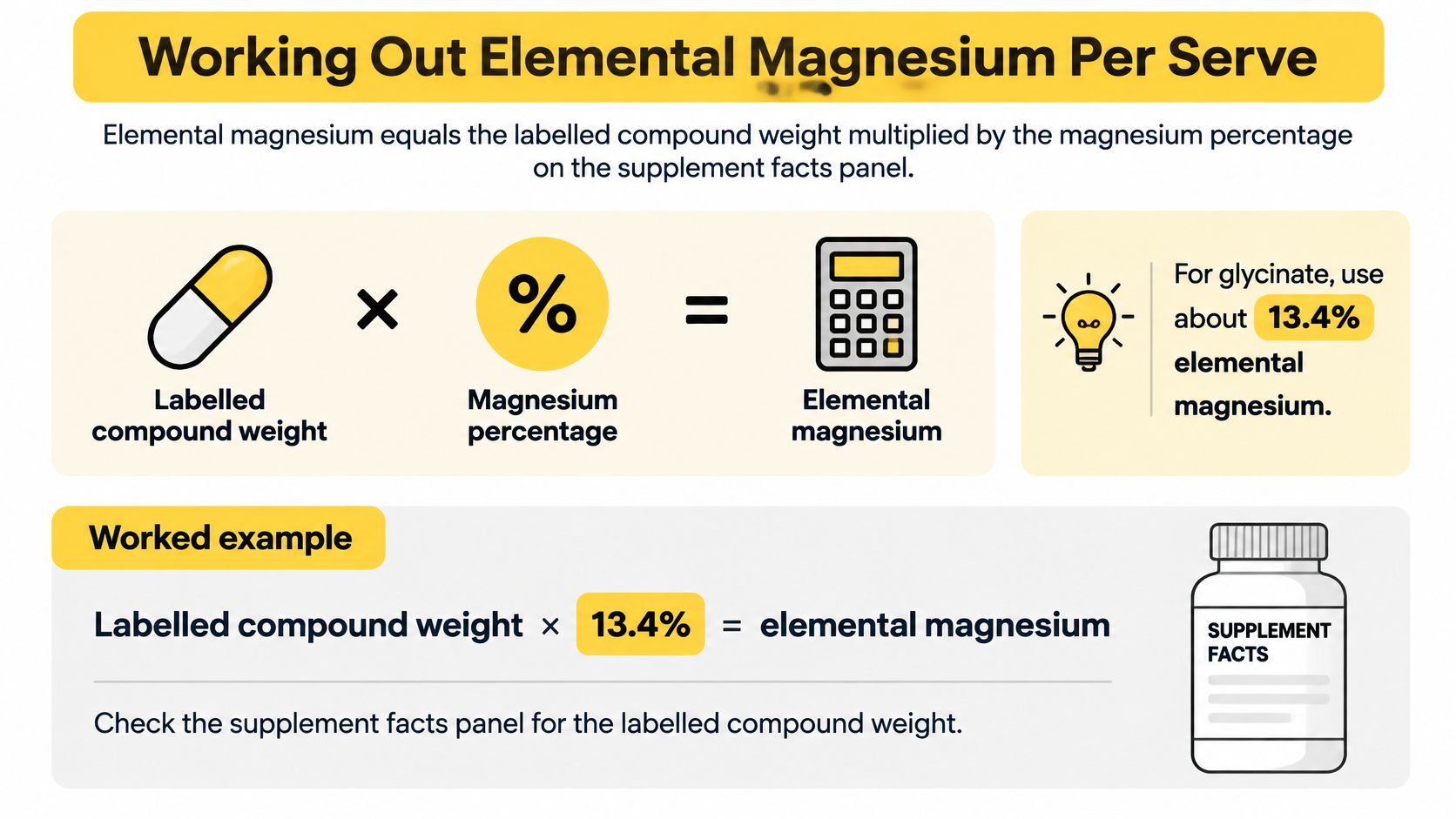
Each row applies that same assumed percentage so the pattern is easy to follow; these are worked examples rather than product doses.
| Label amount | Elemental magnesium |
|---|---|
| Magnesium glycinate 500 mg | About 67 mg, assuming the label specifies 13.4% |
| Magnesium glycinate 1,000 mg | About 134 mg, assuming the label specifies 13.4% |
| Magnesium glycinate 2,000 mg | About 268 mg, assuming the label specifies 13.4% |
| Four-capsule blend serve labelled 400 mg magnesium | 400 mg as labelled; no compound conversion needed |
The Australian Government's naturopathy supplements evidence evaluation gives an NHMRC-derived supplemental upper level of 350 mg/day for adults, separate from magnesium naturally present in food.
The 350 mg/day figure is a threshold for reviewing your total supplemental intake, not a target. In the hypothetical blend example, the stated elemental amount already exceeds that adult supplemental upper level before anything else is counted. Dividing the compound weights again would understate the dose. Keep the result beside the ARTG registration check: a clean calculation does not make an unsuitable serving suitable.
If neither the elemental amount nor enough information to calculate it is available, ask for the complete label. Guessing from the product name isn't a reliable alternative.
Your diet, health conditions and medicines should decide the dose. A product can be clearly labelled and still be unsuitable for you.
The TGA consultation on permissible ingredient changes reports that human studies consistently found doses up to 250 mg elemental magnesium per day well tolerated, while diarrhoea became more evident at approximately 360 mg/day and above. These findings describe study observations, not a personal guarantee of tolerance.
| Your situation | Product consideration | Speak with first |
|---|---|---|
| Diet already covers magnesium | Consider whether supplementation is needed; avoid stacking products | Dietitian if unsure |
| Kidney impairment | Magnesium is cleared by the kidneys; avoid self-selecting high doses | GP or nephrologist |
| Pregnancy or breastfeeding | Total intake across all products matters | Doctor or pharmacist |
| Regular antibiotics, diuretics or bisphosphonates | Possible interactions; timing and dose need checking | Pharmacist |
| Digestive sensitivity | Consider a lower elemental dose and monitor loose stools | Pharmacist or GP if symptoms persist |
| Multi-form magnesium blend | Read every form and the total elemental amount per serve | Pharmacist if unclear |
Kidney impairment needs particular care because reduced clearance can allow magnesium to accumulate. During pregnancy or breastfeeding, bring the labels of your prenatal and other supplements to the consultation rather than discussing each product separately.
For medicines, ask about the exact medicine and magnesium product together. A generic spacing rule does not cover every antibiotic, and changing a prescribed medicine's timing yourself can cause more problems than the magnesium solves.
A single-form glycinate product is different from a formula that adds other minerals or vitamins. At Wallaby Wellness, we sell magnesium supplements, so you can compare ingredient panels across different formulations without assuming they serve the same purpose.
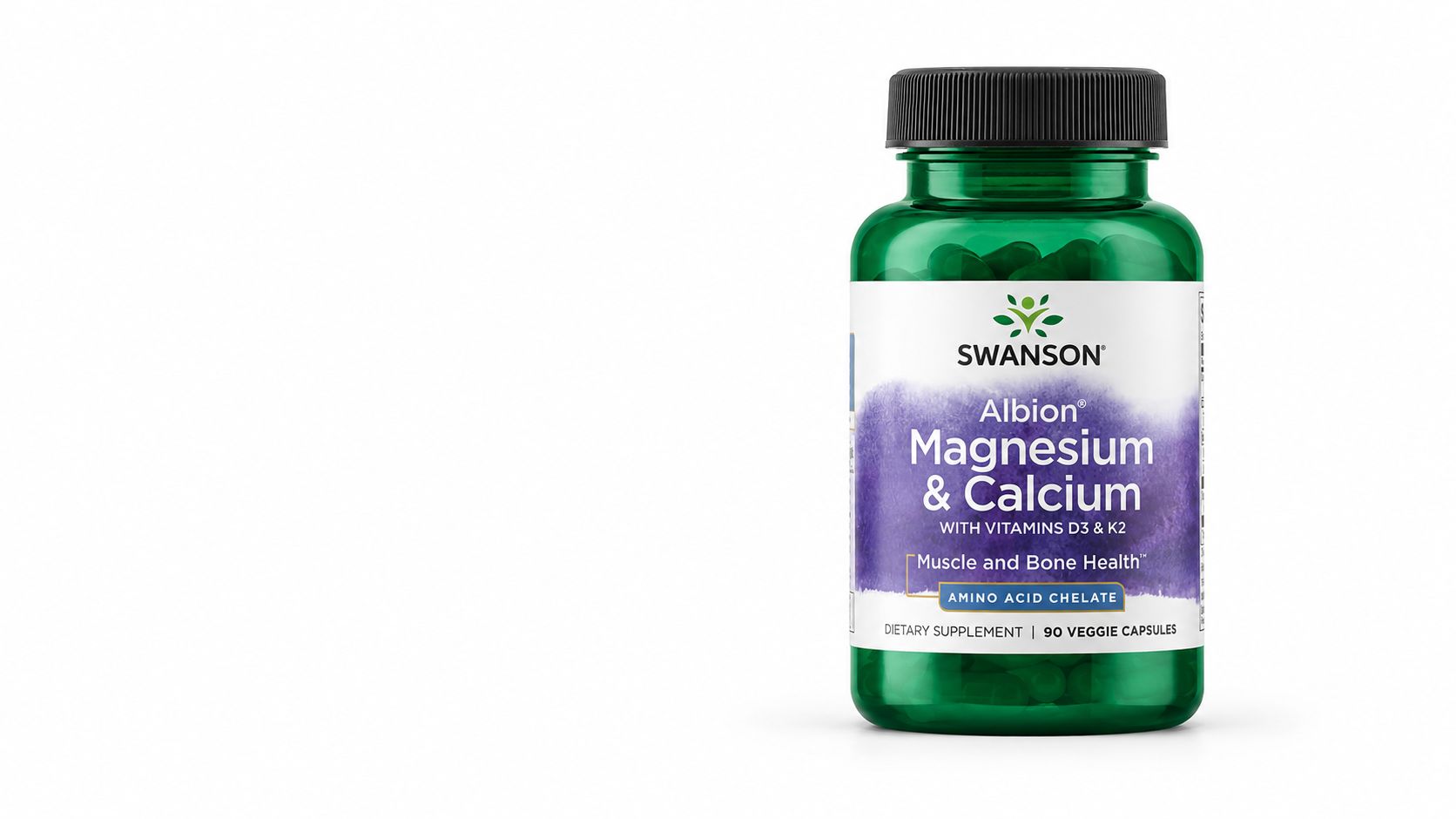
Swanson Albion Chelated Magnesium & Calcium 2:1 90 Veg Capsules combines buffered magnesium bisglycinate chelate with calcium and vitamins D and K. Because each capsule carries more than magnesium, the added calcium, vitamin D and vitamin K become part of your dosing decision. That matters if you already take a combination supplement, a vitamin D product, or medicines where these ingredients are relevant.
If your routine includes other minerals, our guide to the health properties of zinc provides context for reviewing the whole supplement routine rather than one product at a time.
Before changing dose: Bring your current supplement labels and medicine list to the pharmacist. A complete list is more useful than a preferred brand name.
Order only when the register entry, the elemental amount and your medicine list all line up.
Three results justify the purchase: the AUST L or AUST R number on the pack leads to a matching ARTG entry, the label states elemental magnesium per serve rather than only the glycinate compound weight, and every medicine or health condition question has an answer. If any one of these fails, the order waits.
A sponsor name that differs from the brand on the pack does not automatically fail that check. The sponsor is the Australian company holding the listing, which may be a distributor rather than the manufacturer. Compare the product name and formulation in the register entry with the pack: the same product under a different sponsor confirms identity, while a different formulation ends the search.
Pause when the seller states only the compound weight, or when guaranteed sleep or absorption outcomes appear in place of ingredient information. A product that will not state its elemental dose has not earned the order.
The few seconds between reading an appealing product description and clicking pay is where most ordering mistakes happen. Keep the full label open in a second tab while you work through checkout, especially if the retailer uses an overseas pack photograph.
The four-stage infographic condenses the same sequence: confirm the label, compare on elemental content, check delivered cost and returns, then inspect and store.
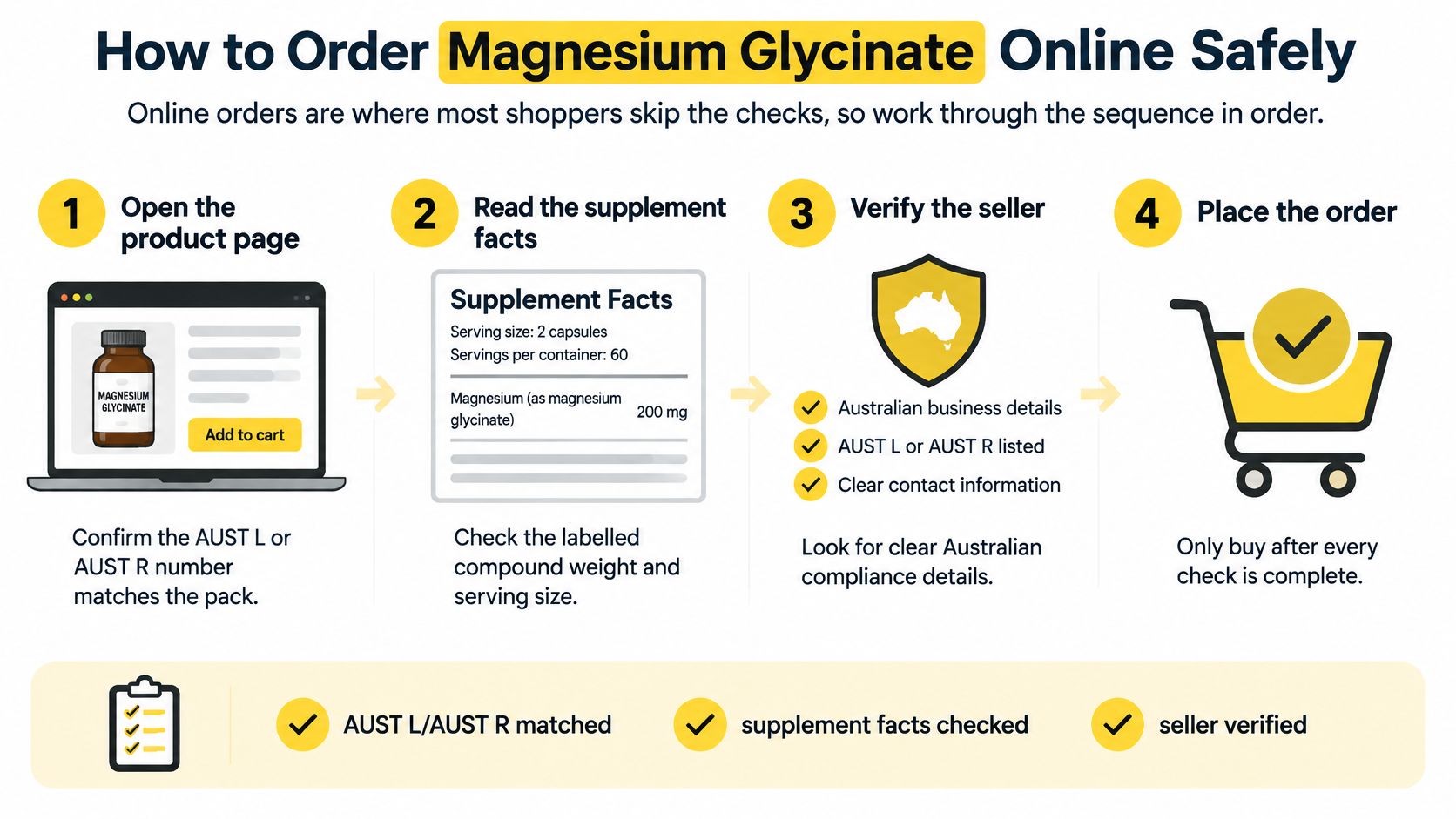
Overseas marketplaces can involve longer delivery times, possible tax or customs charges, and more difficult returns. Confirm the delivered cost and Australian regulatory presentation before treating an apparent saving as better value.
Keep the packaging until you're satisfied that the correct product arrived. If anything differs from the listing, photograph it and contact the retailer before taking the supplement.
We offer magnesium supplements alongside vitamin C, vitamin D, zeolite and colloidal mineral products. Visit Wallaby Wellness to compare magnesium labels, check the elemental amount and choose a formulation that fits your needs after any necessary pharmacist or medical advice.