High Magnesium Foods: 10 Best Picks and How to Eat Them
, 19 min reading time
Discover 10 high magnesium foods with serving-based amounts and easy meal ideas, so you can hit your daily magnesium target with real food. Read more.
Most Australians can build a meaningful magnesium intake from ordinary pantry food before reaching for a supplement, according to Healthdirect's guide to foods high in magnesium. Breakfast bowls, lunch ingredients and snacks are the practical starting point.
Magnesium supports muscle and nerve function, energy metabolism, bones and normal blood pressure. A varied diet comes first. Supplements still have a role once the basics are in place.
Whole foods also bring more to the plate. Nuts, seeds, legumes and grains can add fibre, protein and fats alongside magnesium, while a supplement serves a narrower purpose.
The most useful high magnesium foods are the ones you will eat regularly: pepitas on porridge, black beans in a burrito bowl, cashews through a stir-fry. Across a day, oats at breakfast, beans at lunch and a measured handful of nuts or seeds later on can stack up without turning eating into a separate routine.
Treat the serves below as kitchen portions, not prescribed doses. If you are considering tracking magnesium levels, discuss the result and your symptoms with a healthcare professional rather than changing supplements on your own.
Pepitas are an easy topping, not a meal replacement. Their main practical advantage is that you can add them to food you already enjoy, without cooking another dish.
Start with a spoonful scattered over porridge or yoghurt. For lunch, sprinkle them over roast pumpkin, leafy greens and a grain of your choice, then add a lemon dressing.
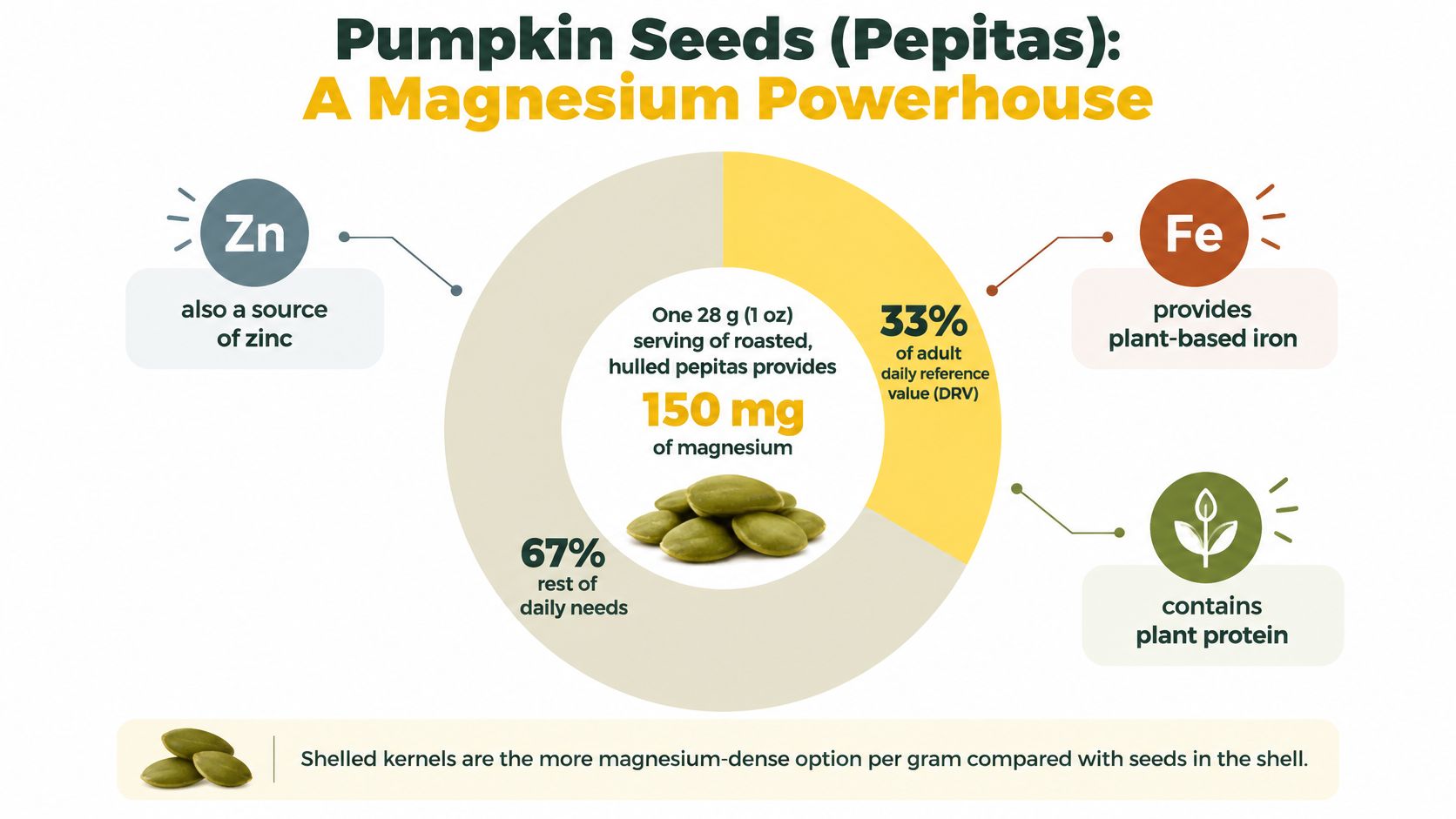
Lightly toast pepitas in a dry frying pan, stirring until fragrant. Let them cool before putting them into a sealed container, otherwise trapped steam can soften them.
Pepitas are useful in nut-free recipes, but nut-free doesn't automatically mean allergen-free. Check packaging and cross-contact warnings if you're preparing food for someone with an allergy.
They also fit into broader mineral-focused eating. Our guide to the health properties of zinc explains another nutrient worth considering across your overall diet, rather than chasing isolated ingredients.
Chia works best when you like its texture. Mixed with liquid, the seeds form a gel that can turn a simple milk-and-fruit mixture into a spoonable breakfast or snack.
Use a modest spoonful in overnight oats, or make a small pudding with milk or a suitable alternative. Stir thoroughly, leave it to thicken in the fridge, then stir again before serving to break up clumps.
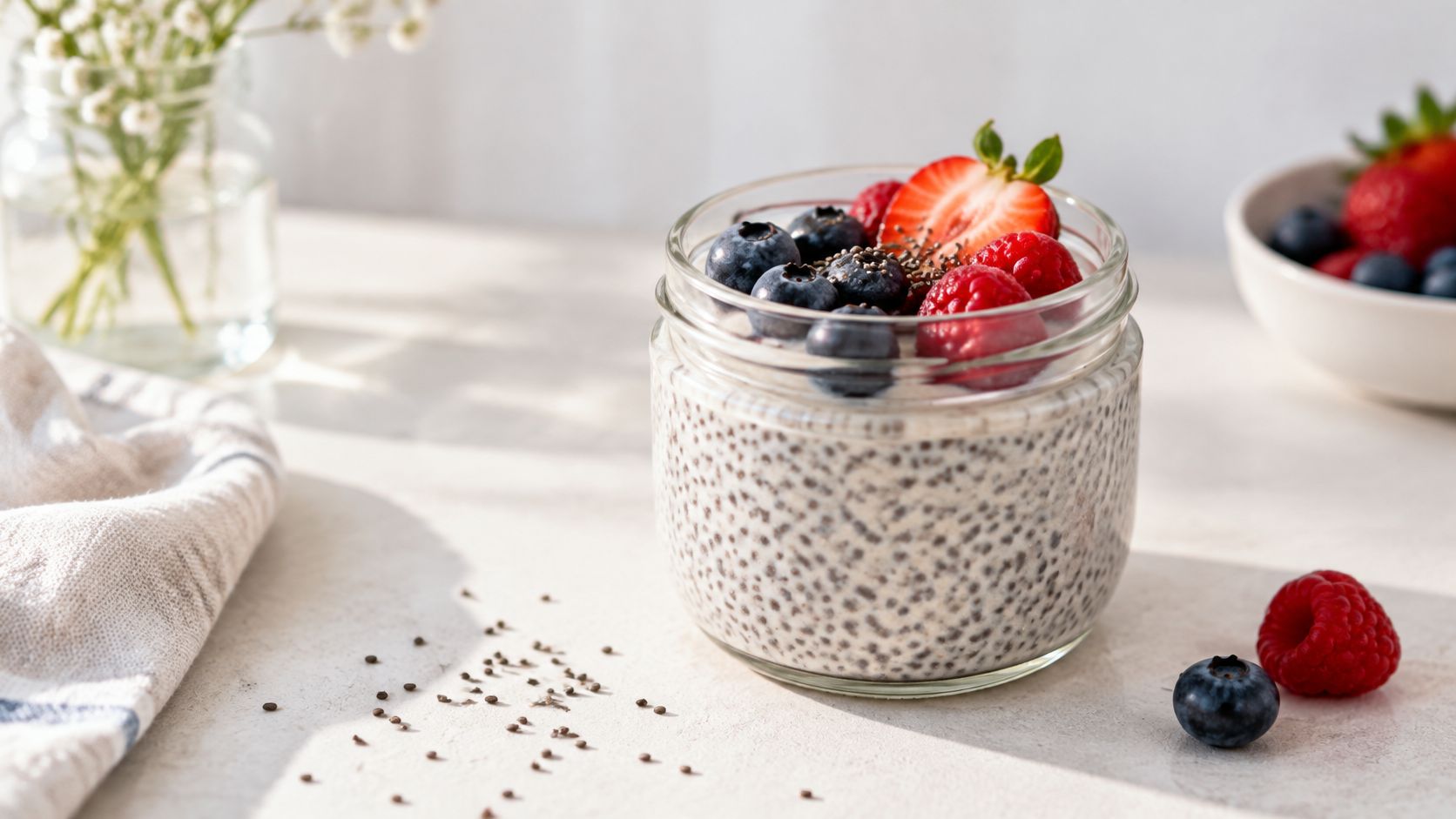
Practical rule: Hydrate chia in food or liquid rather than swallowing a spoonful of dry seeds.
For a breakfast you'll want to repeat, combine hydrated chia with yoghurt, berries and a little cinnamon. If the gel texture puts you off, stir a smaller amount into oats instead of making chia the main ingredient.
Adding several seed-heavy foods at once can leave you uncomfortable. Introduce chia gradually, drink normally through the day and adjust the portion to your tolerance.
Keep the packet tightly closed in a cool cupboard, following its storage instructions. Don't assume a larger chia pudding is automatically a better breakfast, either. Include enough other food to make it satisfying, rather than relying on a large quantity of seeds alone.
For a portable snack, a small, measured handful of almonds is more practical than carrying an open bag. Pair them with fruit when you want something crunchy alongside something fresh.
Raw and dry-roasted almonds both work in everyday meals. Choose the version you enjoy, then check whether added salt, coatings or sweeteners fit the way you intend to use them.
Each form suits a different job, but they aren't interchangeable serving for serving.
Don't count almond biscuits as equivalent to a handful of plain nuts because both contain almonds. The rest of the recipe matters.
Almonds are a tree-nut allergen, so use a suitable alternative if needed and check shared-equipment warnings. If your interest in almonds has come from comparing supplements, our guide to magnesium threonate versus glycinate addresses a different decision. Choosing a supplement form doesn't replace the work of building regular, balanced meals.
Keep whole almonds sealed, and refrigerate them if your kitchen is warm or you buy more than you'll use promptly.
Cashews offer a useful magnesium contribution in a manageable snack portion. The Australian Food Composition Database's raw, unsalted cashew entry reports 250 mg per 100 g, equivalent to approximately 75 mg in a 30 g serving when scaled proportionally.
That value applies to raw, unsalted cashews. Don't automatically assign it to honey-coated nuts, a cashew-based dip or a sauce diluted with water and other ingredients.
For dinner, add a measured portion to a vegetable stir-fry near the end of cooking. For a softer option, soak raw cashews until they blend easily, drain them and process with fresh water, lemon juice and seasoning.
The result can become a creamy pasta sauce or dressing. Portion the nuts before blending, because it's harder to judge how much you're using once they've become a smooth sauce.
The video below offers another way to explore preparing magnesium-rich foods.
Cashews are energy-dense and a tree-nut allergen. Their soft texture doesn't make unlimited handfuls a better choice, and a cashew cream isn't nutritionally identical to dairy cream or milk.
Keep everyday snacking simple: plain nuts, a deliberate portion and a meal pattern that includes more than nuts alone.
A small bowl of cooked spinach is easier to fit beside dinner than a large pile of raw leaves. Cooking reduces its volume, which changes how much spinach you can comfortably eat, but it doesn't create extra magnesium.
Use a modest cooked side serving with eggs, lentils or fish. Alternatively, wilt a generous handful of fresh leaves into pasta sauce and let the whole dish determine the final portion.
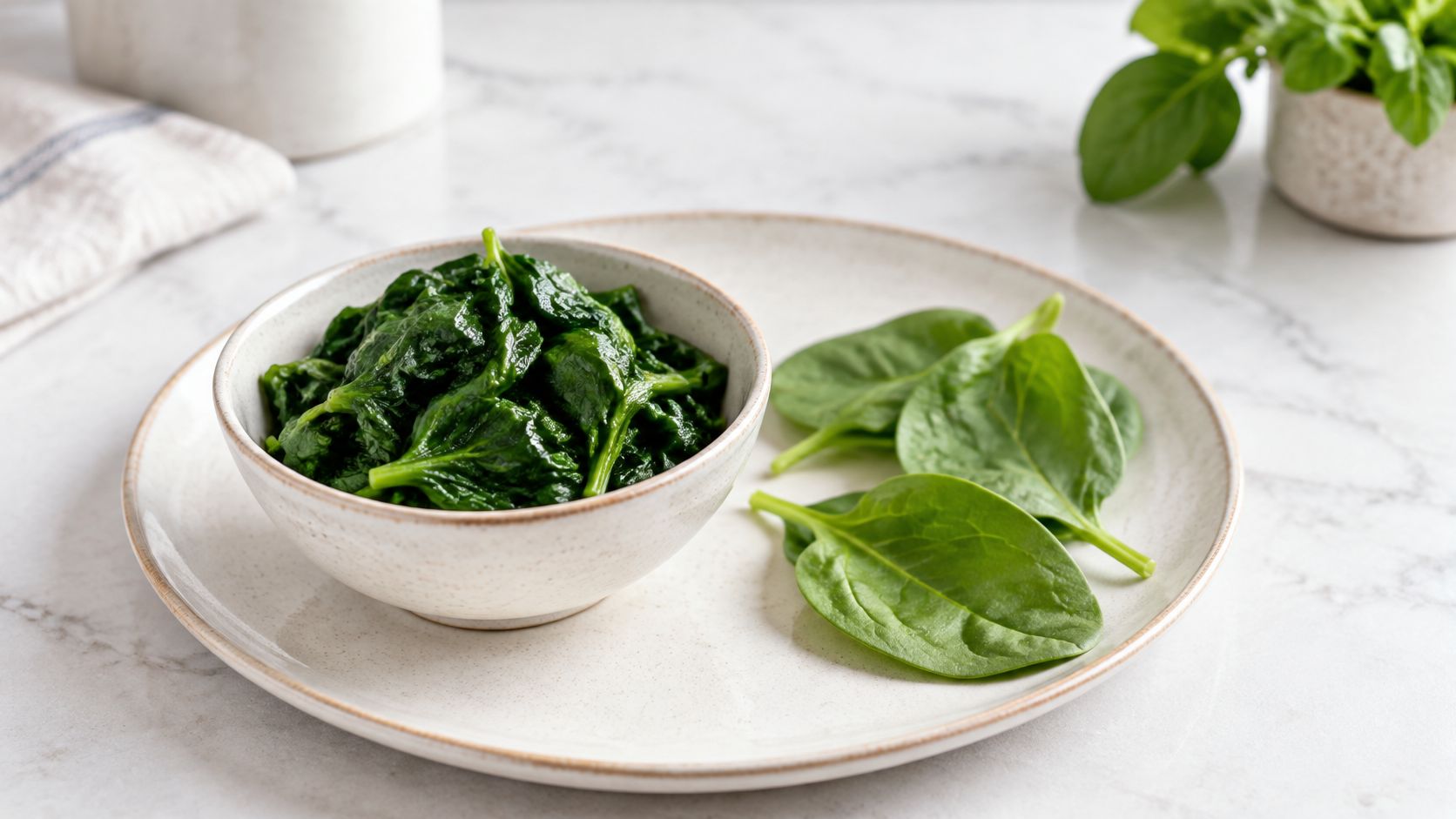
Frozen spinach is a practical choice when fresh leaves regularly go unused. Add it to soup, curry or a bean stew, following the packet's cooking directions.
Oxalates are a relevant trade-off, particularly if you've been advised to manage them because of kidney stones. In that situation, don't build a daily spinach-heavy routine without individual advice.
More spinach isn't always the right answer. Rotate your vegetables and choose an amount that suits your meals and medical needs.
A squeeze of lemon, garlic and a little olive oil can make spinach an enjoyable side. That's more sustainable than forcing down a large plain bowl for a single mineral.
Black beans can do more work in a meal than a seed topping. Use a bowl-sized portion as part of a substantial lunch, or a smaller scoop alongside rice, vegetables and another protein food.
For a straightforward burrito bowl, combine warmed black beans with rice, shredded cabbage, tomato salsa and avocado. Add lime and cumin for flavour before reaching for extra salt.
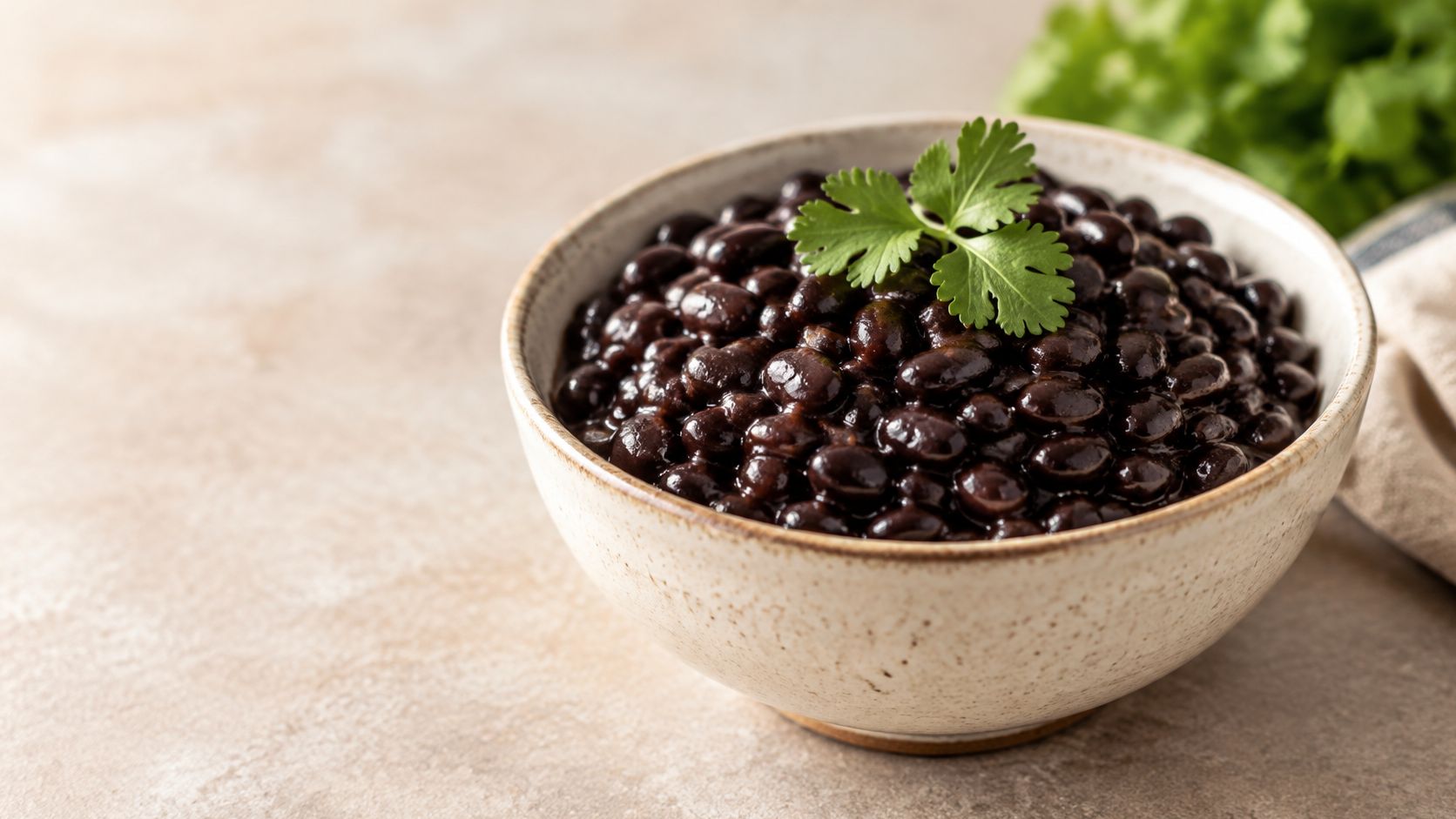
Drain canned beans into a sieve and rinse well. Check the label if you're comparing salted and no-added-salt options, rather than assuming all canned products are alike.
Mash some of the beans into their cooking sauce for a thicker chilli. Leave the rest whole so the meal has texture, then freeze suitable leftovers in meal-sized containers.
The most useful change is regular inclusion in savoury meals. A dependable bean lunch is generally easier to repeat than a complicated recipe made solely to increase magnesium.
Buy shelled edamame when convenience matters. You can add them directly to a grain bowl without peeling pods at the table, and it's easier to judge the portion you'll eat.
Use a small bowl of cooked, shelled beans as a snack, or a generous scoop through noodles and vegetables. Pods are packaging, not part of the edible serving.
Cook frozen edamame according to the packet, then combine with cooled quinoa, grated carrot, cucumber and a sesame-lime dressing. Add herbs or chilli if you enjoy them.
For a warm meal, stir cooked edamame into noodles near serving time. This avoids relying on the brief reheating of a finished dish to cook frozen beans properly.
Don't turn the snack into a competition to eat the largest bowl. The right portion depends on whether it's a nibble before dinner or a main ingredient in lunch.
Edamame is especially useful when you want a plant-based ingredient with more substance than salad leaves alone. Keep it alongside other freezer staples so it's available when fresh food is running low.
Quinoa is most useful when it replaces a grain you already cook, rather than becoming an extra ingredient you feel obliged to add. Serve a small bowl of cooked quinoa with roasted vegetables, beans or edamame.
Its flavour is mild enough for both warm dishes and cold salads. Use lemon, herbs and a dressing to make it appealing, rather than expecting plain quinoa to carry the meal.
Rinse quinoa in a fine sieve if the packet recommends it, then follow the manufacturer's water and cooking instructions. Let it rest after cooking and fluff with a fork instead of repeatedly stirring it into a paste.
For a lunch bowl, spread freshly cooked quinoa in a shallow container so it cools promptly, then refrigerate. Keep dressing separate when you want vegetables and seeds to retain their texture.
Kitchen judgement: A grain you enjoy and prepare regularly is more useful than a supposedly perfect grain you leave untouched in the cupboard.
Quinoa can be part of gluten-free eating, but anyone managing coeliac disease should still check packaging and cross-contact information. A naturally gluten-free ingredient doesn't guarantee every packaged blend or prepared salad is suitable.
It also doesn't need to replace rice everywhere. Alternate grains according to taste, budget and the meal, and use legumes, vegetables and seeds to build variety around them.
Few magnesium foods are as easy to repeat as a bowl of rolled oats. A modest portion costs little, cooks in minutes and pairs with almost any topping, which is why oats suit a breakfast you will eat five days a week.
The Australian Dietary Guidelines name wholegrain foods as magnesium contributors, and their illustrative dietary patterns provide approximately 353–366 mg of magnesium daily. Adult requirements vary by age and sex, so treat that figure as context for your overall eating pattern; no single bowl is expected to deliver the day's intake alone.
A typical breakfast portion is 40 g of dry oats. Magnesium content isn't stated consistently on oat labels, so check the nutrition panel on the packet you buy.
Cook your measured oats with milk or a suitable alternative, then add fruit and a spoonful of pepitas or chia seeds. Two magnesium foods in the same bowl stack faster than either does alone. Yoghurt stirred in after cooking changes the texture and keeps the routine from going stale.
Gluten claims need extra care in Australia, particularly if you manage coeliac disease. An imported label doesn't settle whether oats suit your medical needs, and our guide to whether you can get gluten-free oats explains the local position. If oats aren't suitable, swap in another breakfast base and keep the same approach: a measured serving, varied toppings and attention to the whole meal.
A 28 g serve of 70 to 85% dark chocolate delivers about 65 mg of magnesium, according to US Office of Dietary Supplements figures. That's a handy top-up rather than a staple: add it to a 28 g handful of pepitas at morning tea and a cup of black beans at dinner, and those three serves alone reach roughly 335 mg before the rest of the day counts.
A high cacao percentage describes the style of the bar, not its complete nutritional profile. Sugar, fat, serving size and added ingredients still matter, so compare the ingredient list and nutrition panel rather than trusting the front of the wrapper.
Break off a modest piece, around that 28 g mark, then put the packet away. Serve it after dinner with fruit, or shave a little over yoghurt and oats.
Cacao nibs offer a different texture and a less sweet taste, and they aren't a direct flavour substitute for chocolate in every recipe. Try a small sprinkle before committing a whole breakfast to them.
If chocolate keeps you awake, have it earlier in the day. Your tolerance matters more than fitting it into a rigid routine.
Dark chocolate is an enjoyable option, and it doesn't need to be on your list. If you don't like it, there's no reason to add it purely for magnesium when other foods fit your meals better.
Use one measuring stick across the list: 28 g for seeds, nuts and chocolate, 1 cup cooked for beans, edamame and quinoa, ½ cup cooked for spinach and 40 g dry for oats. On that basis, seeds and cooked legumes pull the most weight, nuts sit in the middle, and dark chocolate stays a small extra.
| Food | Typical serving | Magnesium per serving | Best used in |
|---|---|---|---|
| Pumpkin Seeds (Pepitas) | 28 g (1 oz), roasted and hulled | Strong for a small serve | Porridge, yoghurt, salads, pesto, or granola bars |
| Chia Seeds | 28 g | Strong for a small serve | Chia pudding, smoothies, overnight oats, or baking |
| Almonds | 28 g (about 23 nuts) | Moderate | Snacks, almond butter, or gluten-free baking |
| Cashews | 28 g, roasted | Moderate | Dairy-free sauces, vegan cream, or snacks |
| Spinach | ½ cup cooked (about 90 g) | Moderate, concentrated by cooking | Pasta, curries, omelettes, smoothies, or soups |
| Black Beans | 1 cup cooked | Strong | Tacos, burrito bowls, or higher-fibre brownies |
| Edamame (Young Soybeans) | 1 cup shelled and cooked | Strong | Snacks, grain bowls, salads, or stir-fries |
| Quinoa | 1 cup cooked | Strong | Salads, rice or couscous replacement, or breakfast porridge |
| Rolled Oats | 40 g dry, typical breakfast serving | Useful base, stronger once topped | Porridge, overnight oats, muesli, or baking |
| Dark Chocolate (70 to 85% Cacao) | 28 g | Small extra | Dessert, smoothies, or oat bowls |
Portioning matters more than chasing a bigger list. Nuts and seeds are easy to overshoot straight from the packet, so measure the serve first, then build the meal around it. Cooked spinach shrinks down fast, which makes a modest half cup easier to eat than a large raw bowl.
For trade-offs, keep it practical: nuts and chocolate carry more energy density than oats or beans, soy foods need care where soy allergy is relevant, and spinach-heavy days may not suit people advised to limit oxalate-rich foods. The strongest pattern is still a measured seed or nut topping at breakfast, a legume or quinoa serve at lunch, and a cooked vegetable at dinner.
Pick two or three of these foods and eat them daily. A regular breakfast topping, a legume-based lunch and vegetables at dinner beat an occasional enormous serve of seeds.
Everyday mixed meals count, too. In its 2023 usual-intake analysis, the Australian Bureau of Statistics identified cereal-based mixed dishes, including sandwiches and pasta or noodle dishes, as the leading dietary magnesium source, contributing 12.9% of total intake. Ordinary meals already do much of the work.
Take the serving figures from the table above and add them as you go. Here is how a day stacks up.
That pattern provides close to 700 mg throughout the day on typical servings, before considering anything else you eat. Adjust portions according to your appetite and activity, and check the labels of the products you buy, since edible portion and preparation affect the true figures.
Persistent symptoms deserve assessment. Fatigue, cramps and poor exercise performance do not prove magnesium deficiency, and adding a supplement is no substitute for finding the cause. If food intake stays limited, or you are weighing a particular magnesium form, talk with a GP, pharmacist or accredited practising dietitian who can factor in your health conditions, medicines and existing supplements.
Our range includes magnesium supplements alongside pantry foods such as nuts, seeds, grains and cacao products. Visit Wallaby Wellness to choose a breakfast base, a seed topping and a convenient legume or grain for your next week of meals.